CoreUI PRO for Vue v5.20.0 - Accessibility, Security & Picker Improvements

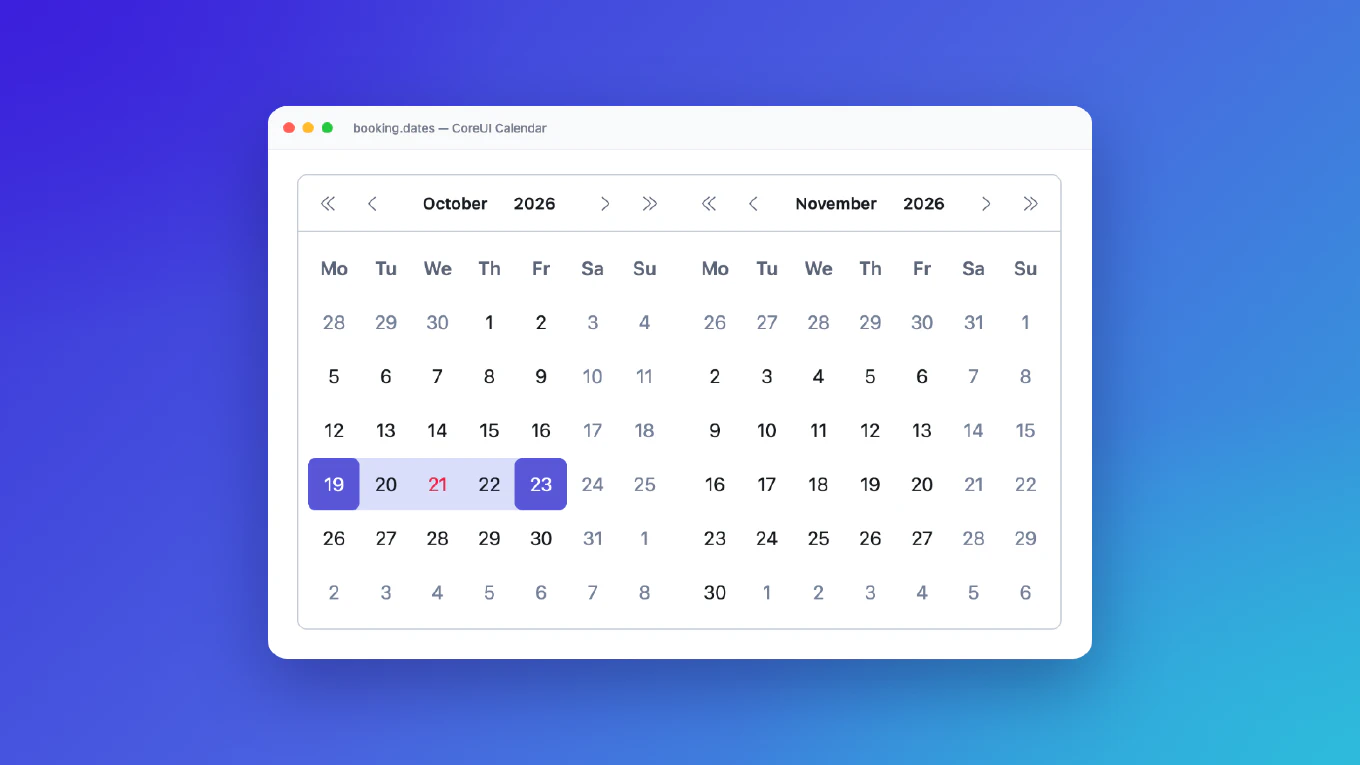
We are excited to announce the release of CoreUI PRO for Vue v5.20.0. This release brings extensive accessibility improvements across the CAutocomplete, CCalendar, CMultiSelect, CRangeSlider, and CRating components, security hardening, and a range of picker and stability fixes.
CoreUI for Vue v5.9.0 - ChipSet, NavGroup Redesign & Major Improvements
We are excited to announce the release of CoreUI for Vue v5.9.0. This is a major feature release introducing the new Chip Set component with filter chips, the Search Button component, a Sidebar Nav tree variant, a redesigned CNavGroup with controlled visibility, and carousel touch swipe support.
CoreUI PRO for Vue v5.19.0 - MultiSelect Enhancements
We are excited to announce the release of CoreUI PRO for Vue v5.19.0. This release delivers significant enhancements to the CMultiSelect component, adding a select-all toggle, selection limit support, selectable option groups, a custom dropdown header slot, a native select overlay for browser required validation, and a range of accessibility improvements.
CoreUI Free Vue.js Admin Template v5.5.0
We’re excited to announce the release of CoreUI Free Vue.js Admin Template v5.5.0 on April 1, 2026! This update introduces Vue Router 5.0 compatibility, new Chip components, comprehensive AI-assistant documentation, and significant dependency updates for improved performance and developer experience.
CoreUI PRO Vue Admin Template v5.8.0
We are excited to announce the release of CoreUI PRO Vue Admin Template v5.8.0. This update brings Vue Router 5.0 compatibility, new Chip components, comprehensive AI-assistant documentation, and all exclusive CoreUI PRO components for building sophisticated enterprise Vue.js admin dashboards with enhanced developer experience.
How to type refs in Vue with TypeScript
Typing ref() values with TypeScript generics ensures that Vue reactive state has correct types, enabling IDE autocompletion and compile-time error detection for all state access and mutations.
As the creator of CoreUI with Vue and TypeScript development experience since 2014, I type every ref in CoreUI Vue components to catch type mismatches early and provide accurate IntelliSense in consuming components.
Vue’s TypeScript integration is excellent — in most cases you don’t need to annotate refs explicitly because TypeScript infers the type from the initial value.
Explicit type annotations are needed for nullable refs, complex interfaces, and DOM element references.
How to type emits in Vue with TypeScript
Typing emits in Vue with TypeScript ensures parent components pass the correct handler signatures, enables IDE autocompletion for event payload properties, and catches mismatched event names at compile time.
As the creator of CoreUI with Vue and TypeScript development experience since 2014, I type every custom event in CoreUI Vue components because it makes the component API self-documenting and prevents subtle bugs where a handler receives the wrong data shape.
The recommended approach in Vue 3 <script setup> uses the defineEmits<{...}>() TypeScript syntax with named tuples for each event’s payload.
This is more concise than the runtime object syntax and provides better type inference for the returned emit function.
How to type props in Vue with TypeScript
Typing props in Vue with TypeScript ensures components only receive valid data, provides IDE autocompletion for prop usage, and catches type errors at compile time rather than runtime.
As the creator of CoreUI with Vue and TypeScript development experience since 2014, I type every prop in CoreUI Vue components to prevent incorrect usage and generate accurate API documentation automatically.
There are two approaches: PropType with the Options API or defineProps generics with <script setup> — the latter is cleaner and more expressive for TypeScript projects.
Both produce the same runtime behavior; the difference is developer experience and type inference quality.
How to define emits in Vue 3 with defineEmits
defineEmits is the <script setup> macro for declaring custom events that a component can emit, replacing the emits option and giving you type-safe emit functions with IDE autocompletion.
As the creator of CoreUI with Vue development experience since 2014, I use defineEmits in every component that communicates with its parent through events, from simple click callbacks to complex form submission payloads.
Declaring emits explicitly serves two purposes: it documents the component’s event API, and it enables Vue to distinguish between custom events and native DOM events on the root element.
The TypeScript generic syntax provides the best developer experience with full type inference on the emitted payload.
CoreUI for Vue v5.8.0 - Chip Components
We are excited to announce the release of CoreUI for Vue v5.8.0. This update introduces two powerful new components - Chip and Chip Input - bringing modern, compact UI elements for tags, labels, and multi-value inputs to your Vue.js applications.