How to create tables in React
Tables display structured data in rows and columns, essential for dashboards, admin panels, and data-heavy applications requiring organized information presentation. As the creator of CoreUI, a widely used open-source UI library, I’ve built table components in React applications throughout my 11 years of React development. The most straightforward approach is using semantic HTML table elements with array mapping to render dynamic data. This method provides accessible, SEO-friendly tables with full control over styling and behavior.
How to create charts in React with Chart.js
Chart.js provides powerful data visualization capabilities in React applications, creating responsive and interactive charts for dashboards, analytics, and reporting. As the creator of CoreUI, a widely used open-source UI library, I’ve integrated Chart.js in admin dashboards throughout my 11 years of React development. The most straightforward approach is using the react-chartjs-2 library, which provides React components wrapping Chart.js functionality. This method offers declarative chart creation with full Chart.js features and automatic updates on data changes.
How to prefetch queries in React Query
Prefetching queries in React Query loads data in advance before users navigate to a page or trigger an action, creating a seamless experience with instant data display. As the creator of CoreUI, a widely used open-source UI library, I’ve implemented prefetching strategies in data-heavy admin dashboards throughout my 11 years of React development. The most effective approach is using queryClient.prefetchQuery in event handlers or navigation logic to load data proactively. This method populates the cache before components mount, eliminating loading states for better user experience.
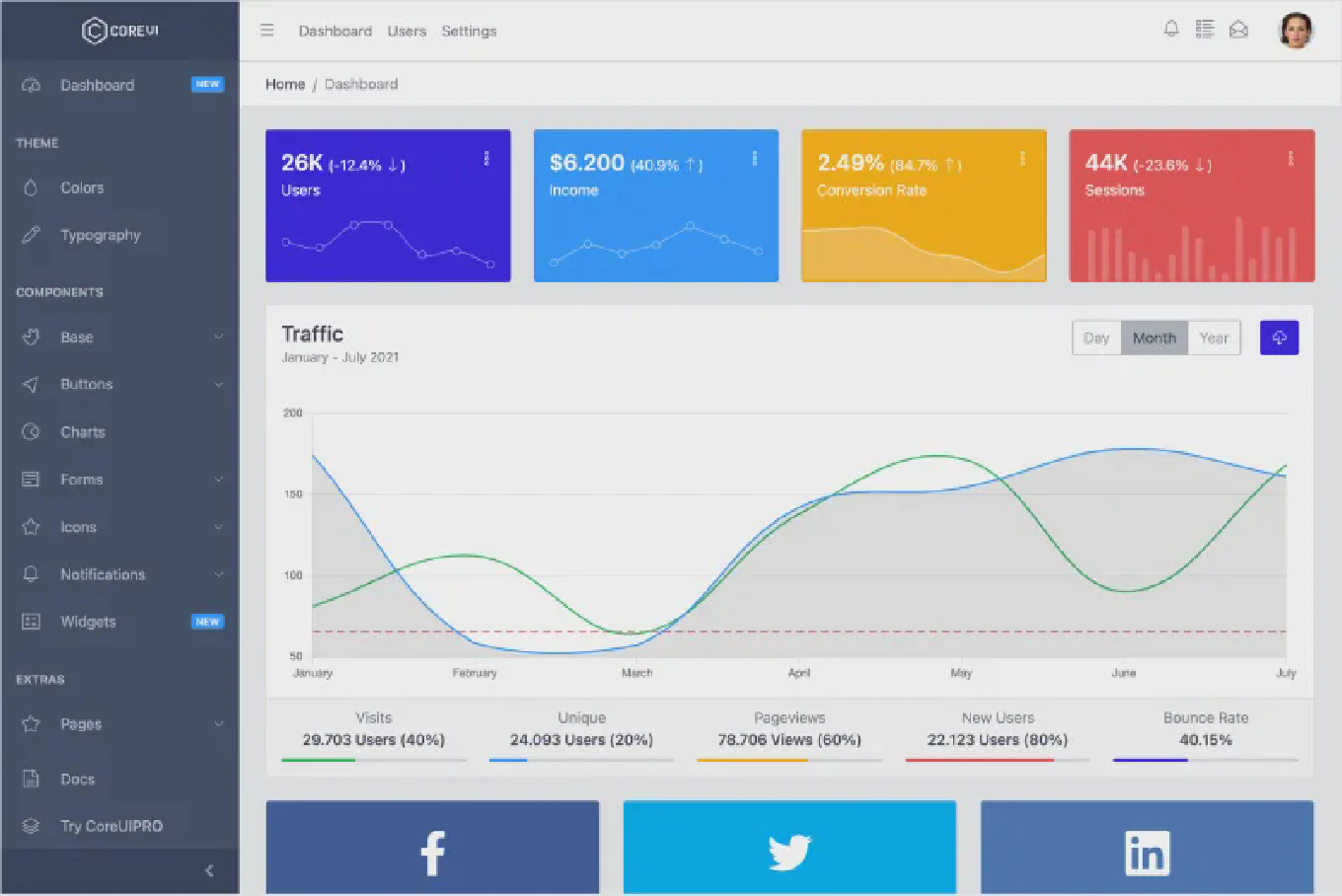
CoreUI PRO React Admin Template v5.8.0

We are excited to announce the release of CoreUI PRO React Admin Template v5.8.0. This update includes enhanced Calendar with custom rendering and quarter selection, new Chip components, and all exclusive CoreUI PRO components for building sophisticated enterprise React admin dashboards.
How to invalidate queries in React Query
Query invalidation in React Query forces refetching of stale data after mutations, ensuring the UI stays synchronized with server state without manual cache updates. As the creator of CoreUI, a widely used open-source UI library, I’ve implemented query invalidation patterns in admin dashboards throughout my 11 years of React development. The most reliable approach is using queryClient.invalidateQueries in mutation callbacks to automatically refetch affected data. This method maintains data consistency across components without complex state synchronization logic.
How to use React Query
React Query simplifies server state management by handling caching, synchronization, and background updates automatically, eliminating the need for manual data fetching logic. As the creator of CoreUI, a widely used open-source UI library, I’ve integrated React Query in complex data-driven applications throughout my 11 years of React development. The most effective approach is wrapping your app with QueryClientProvider and using the useQuery hook for data fetching. This method provides automatic caching, background refetching, and loading states out of the box.
How to use SWR in React
SWR (Stale-While-Revalidate) is a powerful data fetching library that provides automatic caching, revalidation, and error handling out of the box. As the creator of CoreUI, a widely used open-source UI library, I’ve implemented SWR in production React applications throughout my 11 years of development experience. The most straightforward approach is using the useSWR hook with a fetcher function for automatic data management. This method handles caching, background updates, and loading states automatically without manual state management.
How to cache API data in React
Caching API data prevents redundant network requests, improves application performance, and provides better user experience during navigation. As the creator of CoreUI, a widely used open-source UI library, I’ve implemented data caching strategies in React applications throughout my 11 years of framework development. The most effective approach is creating a custom hook that stores responses in memory using a Map or localStorage for persistent caching. This method provides automatic cache management with minimal code changes in your components.
How to show skeleton loaders in React
Skeleton loaders provide better user experience than spinners by showing content placeholders that match the layout of actual data. As the creator of CoreUI, a widely used open-source UI library, I’ve implemented skeleton screens in enterprise applications throughout my 11 years of React development. The most straightforward approach is creating reusable skeleton components with CSS animations that mimic your content structure. This method improves perceived performance and reduces layout shift when data loads.
How to fetch paginated API data in React
Fetching paginated data from APIs is essential for handling large datasets efficiently without overwhelming the client or server. As the creator of CoreUI, a widely used open-source UI library, I’ve implemented pagination in countless data-driven applications over my 11 years of React development. The most effective approach is using state to track the current page and useEffect to fetch data whenever the page changes. This method provides smooth pagination with proper loading states and error handling.