Bootstrap 6: Everything You Need to Know (And Why CoreUI Is Already Ahead)
 Łukasz Holeczek
Follow Łukasz Holeczek on GitHub
Connect with Łukasz Holeczek on LinkedIn
Follow Łukasz Holeczek on X (Twitter)
Łukasz Holeczek
Follow Łukasz Holeczek on GitHub
Connect with Łukasz Holeczek on LinkedIn
Follow Łukasz Holeczek on X (Twitter)

The Bootstrap community has been buzzing with questions about Bootstrap 6 since development work began appearing on GitHub. As developers search for answers about the next major release, many are discovering that waiting might not be the best strategy. Let me break down what we know about Bootstrap 6 and show you why CoreUI already delivers everything the new version promises to offer.
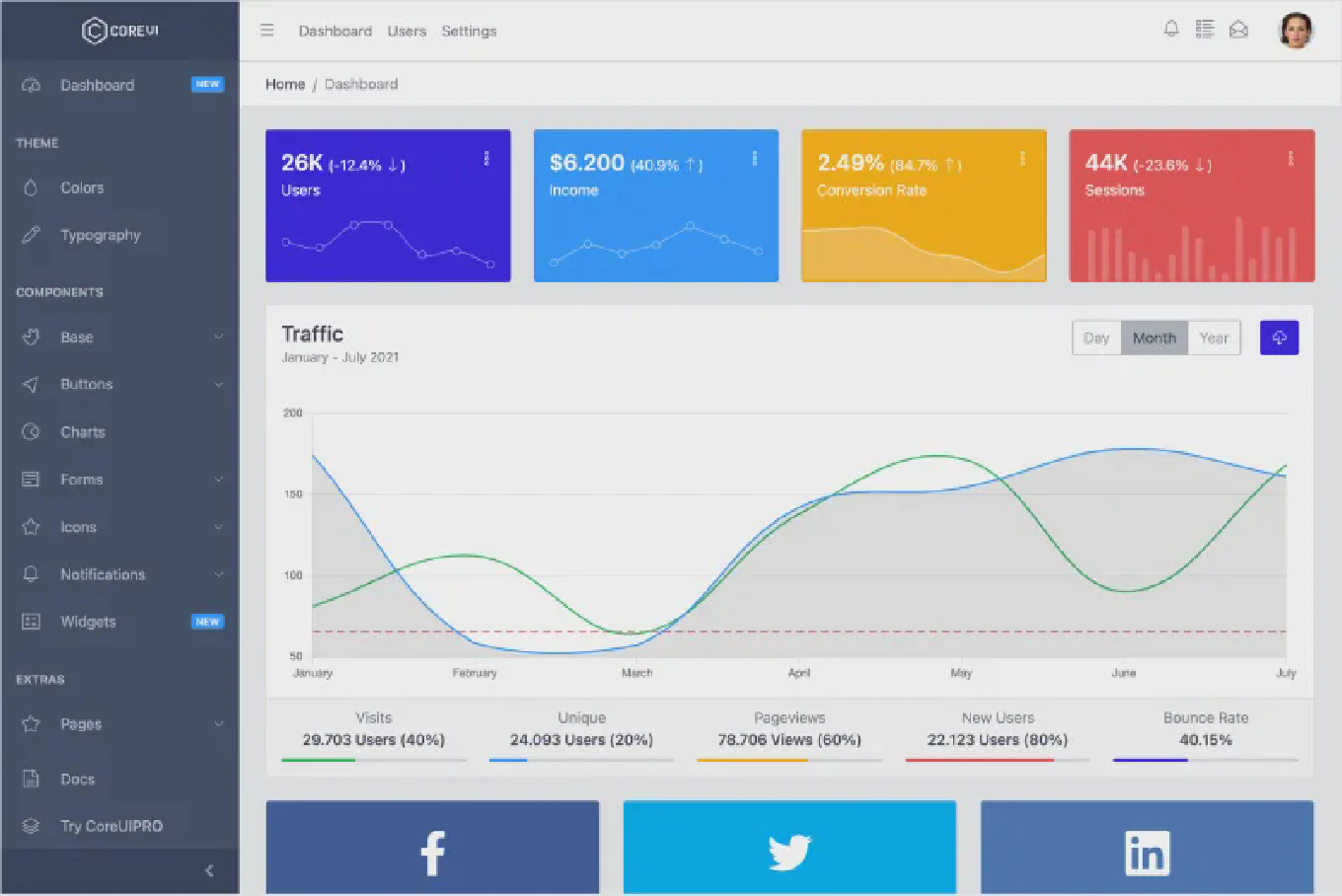
Speed up your responsive apps and websites with fully-featured, ready-to-use open-source admin panel templates—free to use and built for efficiency.




Is There a Bootstrap 6?
Yes, Bootstrap 6 is in active development. According to official discussions on GitHub, the Bootstrap team started preliminary work on version 6, though maintainers note that the project is still in early stages. The team continues to focus on bootstrap 5 patches and potential 5.4 release before fully moving to the next major version.
The Bootstrap 6 release timeline remains uncertain. When asked about expected dates, Bootstrap maintainers have consistently stated that version 6 won’t arrive soon. The team needs to complete several features and finalize breaking changes before the first alpha version becomes available for download.
What to Expect from Bootstrap 6
Based on GitHub discussions and community feedback, Bootstrap 6 will introduce several significant changes. The most notable update involves moving from traditional Sass @import statements to modern Sass modules using @use and @forward. This change addresses deprecation warnings in Dart Sass and aligns with current best practice in the CSS ecosystem.
The new version will likely drop support for older tools like node-sass, forcing developers to migrate their build processes. Bootstrap maintainers continue to evaluate whether these breaking changes belong in version 5.4 or should wait for the full Bootstrap 6 release.
Additional features expected in Bootstrap 6 include improved CSS logical properties for better RTL support, potential web components for js components, and enhanced utilities for modern layout needs. The framework will maintain its core philosophy of providing extensible HTML and CSS-based components while updating the foundation for current web standards.
Is Bootstrap Still Relevant in 2025?
Bootstrap remains one of the most widely-used CSS frameworks in the world, but questions about its relevance continue to surface. The framework still powers millions of websites and provides a solid foundation for rapid development. However, the lengthy gap between major releases and reliance on community plugins for framework integration raise valid concerns.
The open source project maintains strong community support, but full-time development resources have always been limited. This affects how quickly new features get added and how modern capabilities get integrated into the framework. Many developers now search for alternatives that offer faster iteration and better native framework support.
What Has Replaced Bootstrap?
No single framework has completely replaced Bootstrap, but several options provide compelling alternatives. Tailwind CSS has gained significant traction with its utility-first approach. Component libraries like Material UI and Ant Design offer comprehensive solutions for React developers. However, these options often require learning entirely new paradigms.
CoreUI represents a different approach. Instead of replacing Bootstrap, it extends the familiar Bootstrap foundation with everything developers actually need. You get all the Bootstrap components you know, plus framework-native versions for React.js 18+, Vue.js, and Angular. No need to search for third-party plugins or worry about compatibility problems.
Is Bootstrap End of Life?
Bootstrap is not end of life, but the situation deserves a warning. Bootstrap 5 remains actively maintained with regular updates and security patches. However, bootstrap 4 and bootstrap 3 support has moved to a paid model through HeroDevs’ Never-Ending Support program. This creates uncertainty for projects that can’t immediately upgrade.
The slow pace of major releases also raises questions about long-term viability. When Bootstrap 6 finally arrives, it may include breaking changes that require significant refactoring. Projects built on bootstrap 5 today might face difficult upgrade decisions years from now.
CoreUI: Bootstrap 6 Features Available Today
Here’s where things get interesting. While developers wait for Bootstrap 6, CoreUI already provides everything the new version promises and much more. Even better, CoreUI maintains 100% compatibility with Bootstrap, so you can use it immediately without changing a single line of your existing code.
Let me show you what’s included.
Framework-Native React Components
CoreUI offers official React.js 18+ support with proper functional components, not community-maintained wrappers. When you need to create a React application, you get components specifically built for React patterns and hooks. Here’s a quick example:
import { CButton, CCard, CCardBody } from '@coreui/react'

const MyComponent = () => {
  return (
    <CCard>
      <CCardBody>
        <CButton color='primary'>Click Me</CButton>
      </CCardBody>
    </CCard>
  )
}
This native integration means you don’t need to search for compatible js components or figure out how to properly set focus to input react elements. Everything works as expected with React 18+ features.
Sass Modules Support Today
Remember how Bootstrap 6 plans to add Sass modules? CoreUI already supports them. You can use modern @use syntax instead of deprecated @import statements. The generated CSS uses current best practices, and you can override variables using the new Sass maps without compatibility issues.
Extended Component Library
CoreUI includes components Bootstrap lacks by default. Need range sliders? They’re included. Multi-select dropdowns? Included. Step-based form wizards? Included. You get a comprehensive toolkit without searching for individual components or worrying about whether they’ll work together.
The buttons collection alone offers more variants and utilities than standard Bootstrap. Primary, secondary, success, danger, warning, and info colors all work seamlessly with light and dark themes. The extensible design lets you add custom colors and extend existing components as needed.
Modern RTL and Internationalization
Using CSS logical properties, CoreUI provides seamless RTL and LTR support. No need to override dozens of CSS rules or maintain separate stylesheets. Your application works correctly in any language without extra configuration or custom utilities.
Long-Term Support Without Extra Cost
While bootstrap 3 and bootstrap 4 now require paid support subscriptions, CoreUI continues to provide long-term support at no additional cost. The full-time development team ensures consistent updates, security patches, and feature additions.
Getting Started with CoreUI
You can get started with CoreUI immediately without waiting for Bootstrap 6. The documentation provides clear examples for all components, and installation takes minutes. Whether you prefer CDN links like <link rel='stylesheet' href='https://cdn.jsdelivr.net/npm/@coreui/coreui/dist/css/coreui.min.css'> or npm installation, setup is straightforward.
For React developers, the process looks like this:
import '@coreui/coreui/dist/css/coreui.min.css'
import { CButton } from '@coreui/react'

const App = () => {
  const handleAction = () => {
    console.log('Button clicked')
  }

  return (
    <div>
      <CButton color='primary' onClick={handleAction}>
        Get Started
      </CButton>
    </div>
  )
}
The learning curve stays minimal because CoreUI builds on Bootstrap conventions. If you know Bootstrap, you already understand most of CoreUI. The additional features enhance rather than replace familiar patterns.
Why Wait for Bootstrap 6?
The case against waiting becomes clear when you consider the timeline. Bootstrap 6 won’t arrive soon, and even when it does, you’ll need to migrate your project and possibly receive breaking changes. Features like Sass modules, framework integration, and additional components won’t magically appear. You’ll still need to find solutions for gaps in functionality.
CoreUI solves these problems today with zero migration required. Because CoreUI maintains 100% Bootstrap compatibility, you can start using it immediately. Your current Bootstrap code continues working perfectly while you gain access to features developers actually need. The project receives regular updates, maintains compatibility with current tools, and provides capabilities that would take years to appear in standard Bootstrap.
Making the Move
Here’s the best part: CoreUI maintains 100% compatibility with Bootstrap. You don’t need to migrate anything. Your existing Bootstrap code continues to work exactly as before, and you can immediately start using CoreUI’s additional components and features alongside your current implementation.
This complete compatibility means zero risk. You can drop CoreUI into your Bootstrap project today and gradually adopt new features as needed. No breaking changes, no refactoring required, no searching through your codebase to update class names or component structures. Everything just works.
Conclusion
Bootstrap 6 development has started, but the release date remains uncertain. While we wait, the web development world continues moving forward. CoreUI already delivers everything Bootstrap 6 promises, plus framework-native support, additional components, and modern features like Sass modules and CSS logical properties.
The purpose of this article isn’t to suggest Bootstrap has reached end of life or lacks value. Bootstrap remains a solid foundation, and the community continues to provide excellent support. However, if your project needs more than basic HTML and CSS utilities, or if you’re building with React 18+, waiting for Bootstrap 6 makes little sense when CoreUI offers a comprehensive solution today.
Best of all, CoreUI’s 100% Bootstrap compatibility means you take on zero risk. Your existing Bootstrap code works without any changes. You simply gain access to additional capabilities, framework-native components, and modern features that would otherwise require waiting years for Bootstrap 6.
Check out CoreUI’s documentation and see how it can accelerate your next project. You might find that what you thought would require Bootstrap 6 is already available, tested, and ready to use. Sometimes the best solution isn’t to wait for the next version but to use tools that already solve your problems without any migration effort.