CoreUI Free Angular Admin Template v5.7.30 - Angular 22.1.7 Update

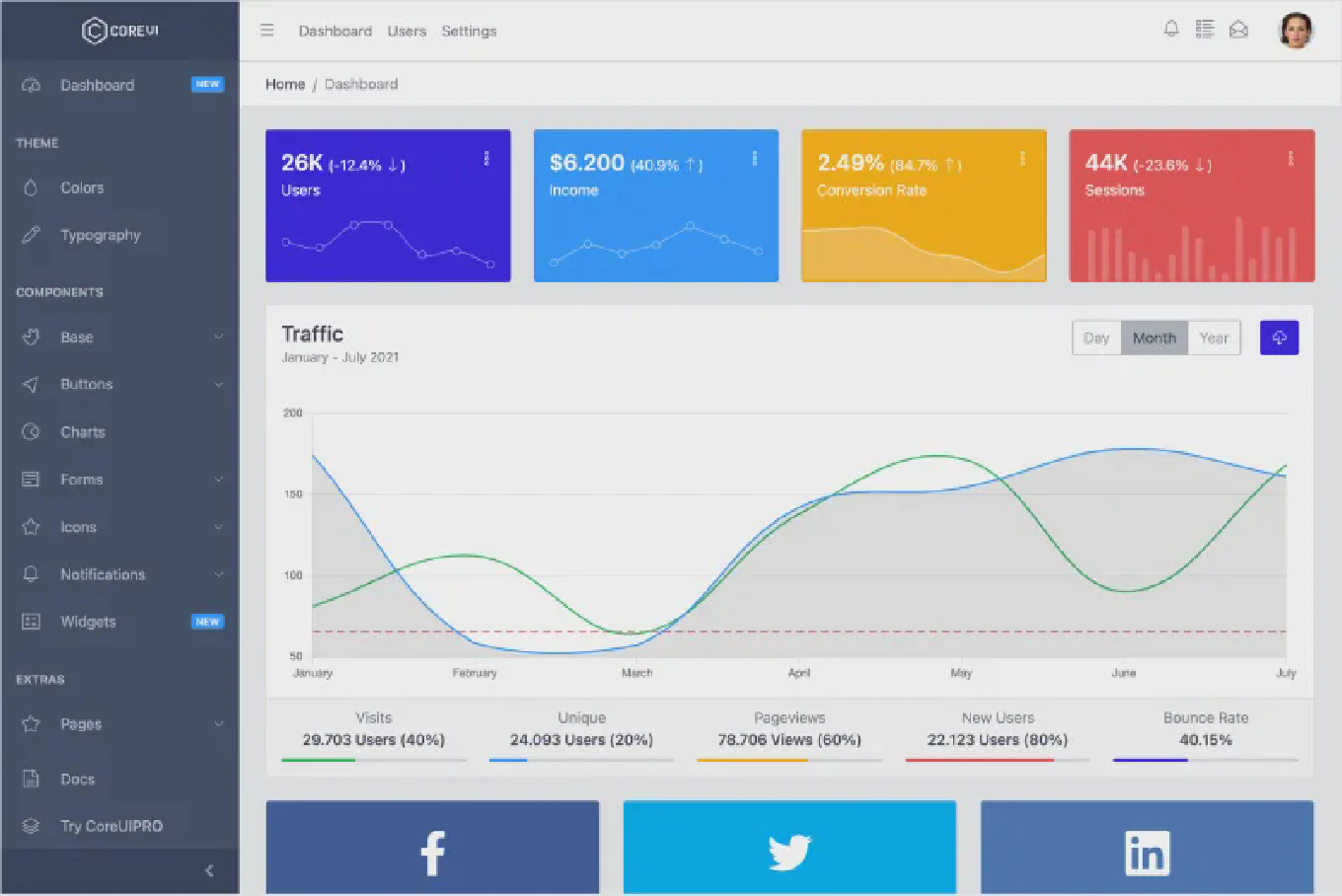
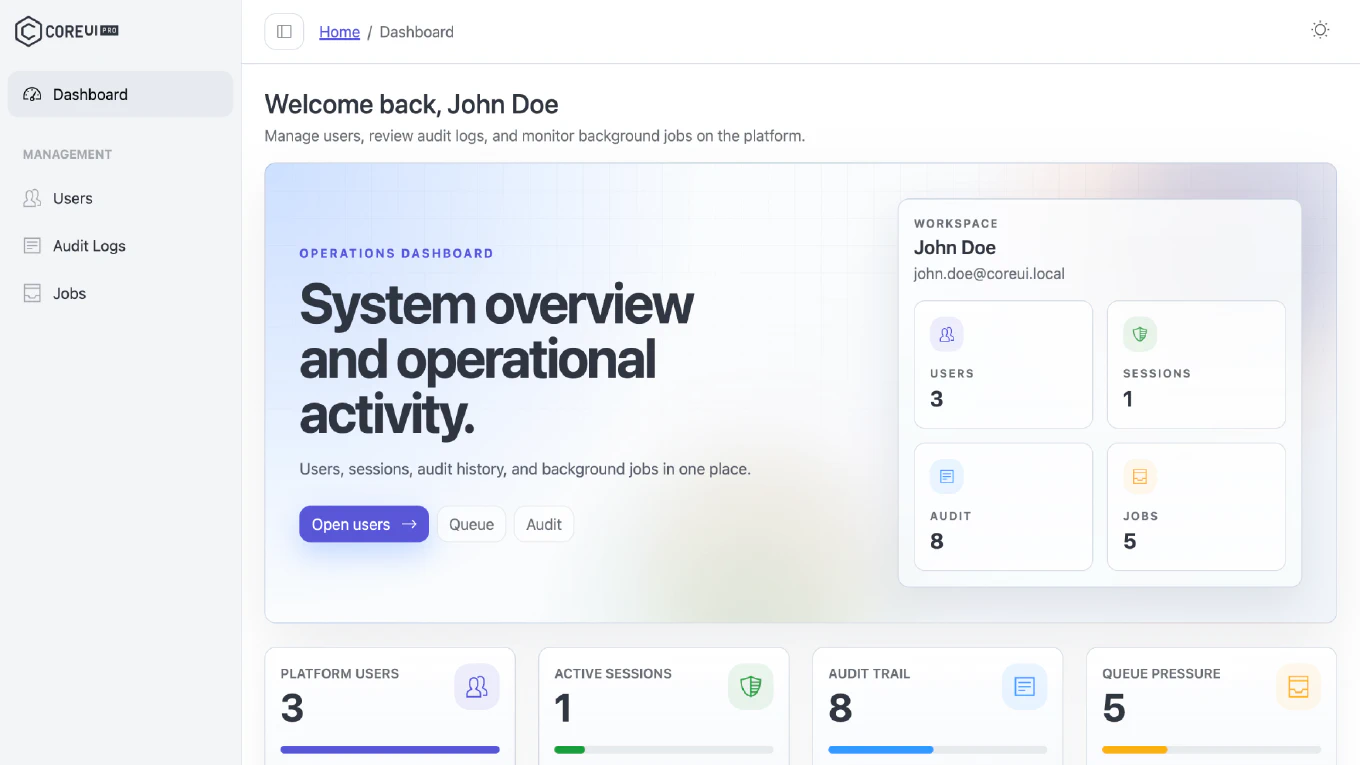
We are pleased to announce the release of CoreUI Free Angular Admin Template v5.7.30. This maintenance update aligns the template with Angular 22.1.7, refreshes the bundled CoreUI packages, and updates the test tooling.
CoreUI PRO for Angular v5.7.30 - Calendar Week Selection and One-Time Password Fixes
We are pleased to announce the release of CoreUI PRO for Angular v5.7.30. This release fixes ISO week numbers and week selection in the Calendar, makes the One-Time Password input work correctly with Angular forms and with Backspace, and aligns the library with Angular 22.1.7. No breaking changes were announced in the published release notes.
CoreUI PRO for Angular v5.7.29 - Multi Select Select All Toggle and Selection Limit
We are pleased to announce the release of CoreUI PRO for Angular v5.7.29. This release turns the Multi Select select all button into a toggle with a tri-state checkbox indicator and two scopes, adds selectionLimit, and fixes internal controls of the Multi Select, Range Slider and Smart Table that tried to register with a surrounding form. The library is built for Angular 22.1.5.
CoreUI for Angular v5.7.28 - Sidebar Nav Tree Variant
We are pleased to announce the release of CoreUI for Angular v5.7.28. This release adds a tree variant to the Sidebar navigation, makes compact work on a whole c-sidebar-nav, and animates the collapse of template-based nav groups. It also changes how dropdownMode="none" treats the active route - see the Migration Notes below.
CoreUI Free Angular Admin Template v5.7.28 - Angular 22.1.5 Update
We are pleased to announce the release of CoreUI Free Angular Admin Template v5.7.28. This maintenance update aligns the template with Angular 22.1.5 and refreshes the bundled CoreUI packages.
CoreUI PRO for Angular v5.7.28 - Sidebar Nav Tree Variant
We are pleased to announce the release of CoreUI PRO for Angular v5.7.28. This release adds a tree variant to the Sidebar navigation, makes compact work on the whole c-sidebar-nav, changes dropdownMode="none" so the active route no longer opens any group, and lets collapsing nav groups animate. The library is built for Angular 22.1.5.
CoreUI PRO for Angular v5.7.27 - Popover Reference Input and JSDoc Fixes
We are pleased to announce the release of CoreUI PRO for Angular v5.7.27. This release corrects JSDoc comments across components and, along the way, gives the Popover its own cPopoverRef input for positioning on a reference element. The library is built for Angular 22.1.5.
CoreUI for Angular v5.7.26 - Backdrop Cleanup on Destroy and Angular 22.1.5 Update
We are pleased to announce the release of CoreUI for Angular v5.7.26. This release makes the Offcanvas and Sidebar components remove their backdrop when they are destroyed, cleans up the aria-*, inert and tabindex bindings across components, and aligns the library with Angular 22.1.5. No breaking changes were announced in the published release notes.
CoreUI for Angular v5.7.27 - Popover Reference Input and JSDoc Fixes
We are pleased to announce the release of CoreUI for Angular v5.7.27. This release corrects JSDoc comments across components and, as part of that pass, gives the Popover reference input its own name, cPopoverRef. The release notes list only documentation fixes, but the renamed input needs a template change if you use it - see the Migration Notes below.
CoreUI PRO for Angular v5.7.26 - Backdrop Cleanup and Angular 22.1.5 Update
We are pleased to announce the release of CoreUI PRO for Angular v5.7.26. This release clears the Offcanvas and Sidebar backdrop when the component is destroyed, cleans up the aria-*, inert and tabindex bindings across components, fixes JSDoc comments, and aligns the library with Angular 22.1.5. No breaking changes were announced in the published release notes.