How to integrate CoreUI Pro with Angular enterprise apps
Integrating CoreUI Pro into an Angular enterprise application requires a strategic approach to handle professional components, private registries, and scalable architecture.
As the creator of CoreUI, I have architected dozens of enterprise-grade dashboards using this exact workflow.
The most efficient and modern solution involves configuring a private registry for the Pro packages and leveraging standalone components for a lean, high-performance bundle.
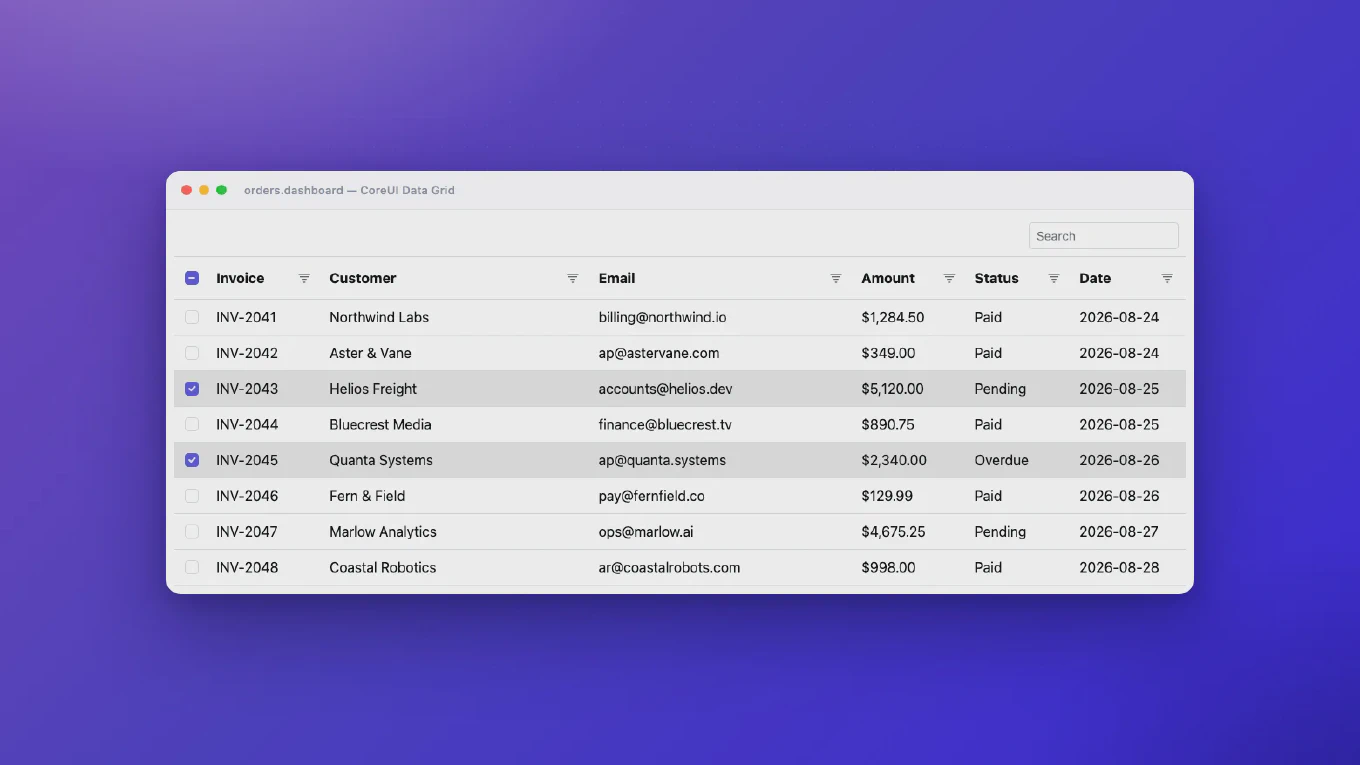
By following this guide, you will ensure your application is built on a reliable foundation with access to advanced features like the Smart Table.
How CoreUI Pro Next.js Boilerplate helps teams ship faster in production
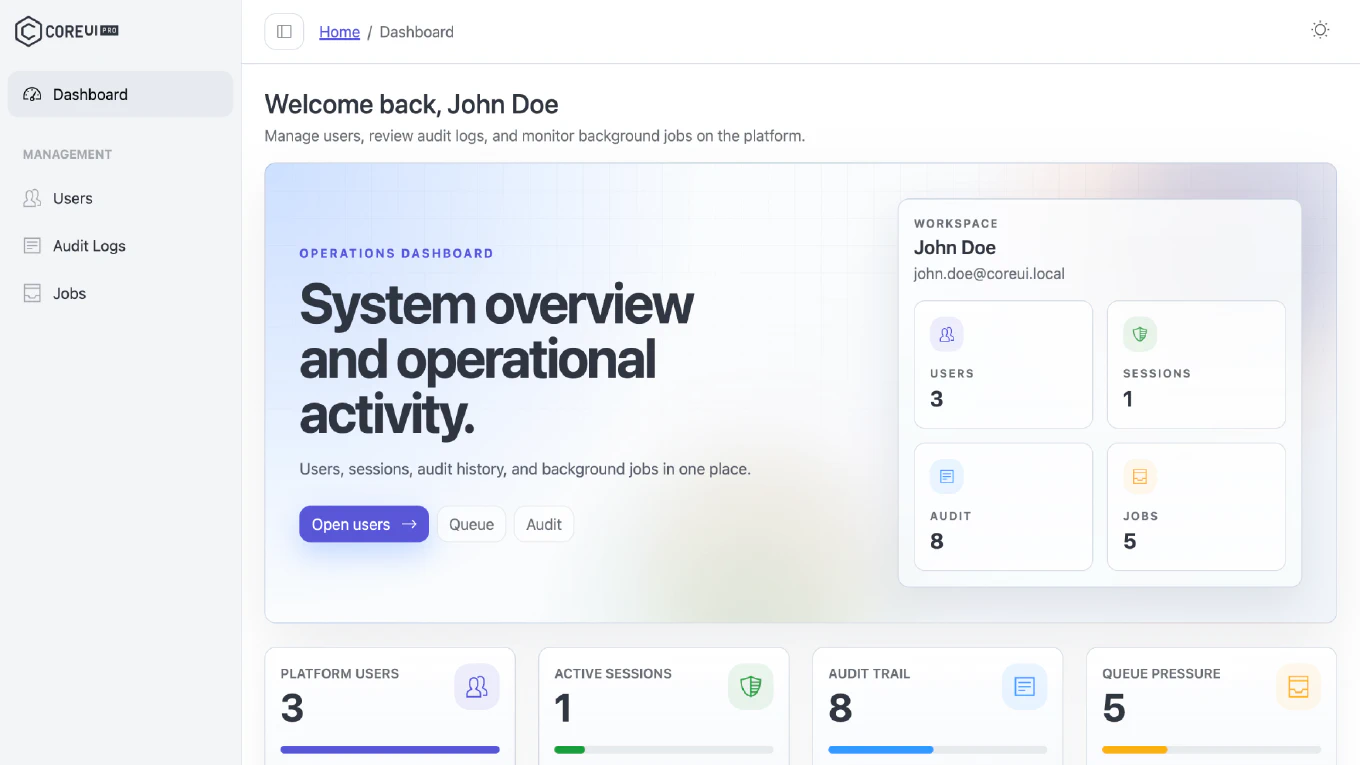
Shipping an internal tool or admin panel faster is rarely about writing more code — it is about writing less of the infrastructure code that every screen depends on but none of the product requirements mention. CoreUI Pro Next.js Boilerplate is built on that premise: it is not a starter template with polished screenshots, but a production-oriented application foundation with authentication, RBAC, and the structural patterns teams otherwise spend weeks assembling before touching a single product feature. That changes the buying criteria. Instead of comparing screenshots, teams should compare delivery speed, maintainability, access control, and how quickly the first real screen ships.
How to build a calendar in Angular
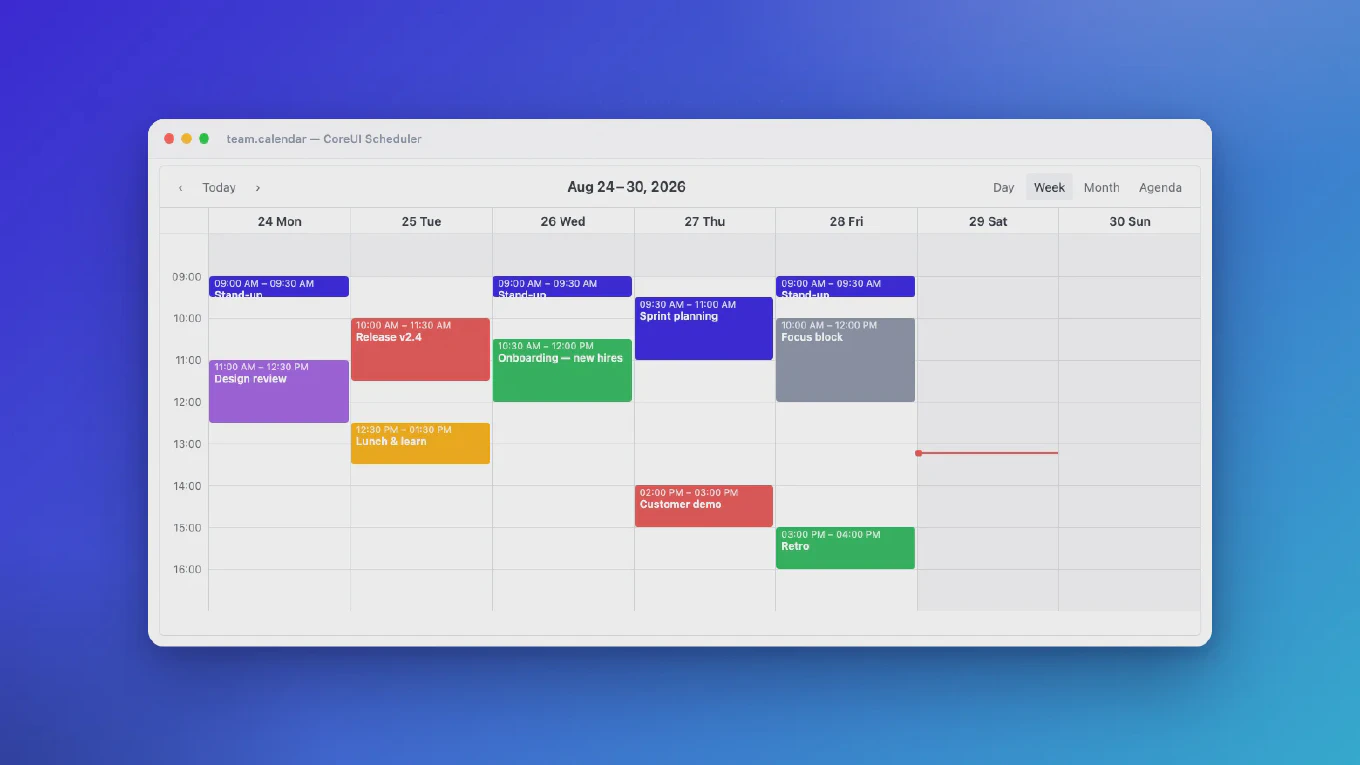
Building a custom calendar in Angular is a common requirement for applications involving scheduling, booking, or event management.
As the creator of CoreUI, I’ve designed and implemented numerous calendar systems ranging from simple date pickers to complex resource schedulers.
The most efficient and modern approach involves leveraging TypeScript’s Date object to calculate month structures and using CSS Grid for a responsive, accessible layout.
While building from scratch is great for learning, for enterprise-grade applications, using a battle-tested library like CoreUI can save weeks of development time.
How to build a Kanban board in Angular
Building a functional and performant Kanban board in Angular is a common requirement for project management and CRM applications.
As the creator of CoreUI, I have built dozens of drag-and-drop interfaces for enterprise-grade dashboards.
The most efficient and modern solution is to leverage the @angular/cdk/drag-drop module, which handles the complex physics and accessibility of moving items between lists.
By combining this with CoreUI components, you can create a board that is both highly functional and visually polished.
How to build an e-commerce cart in Angular
Building a robust e-commerce cart is a fundamental requirement for any online storefront, yet managing state effectively across multiple components can often become complex. As the creator of CoreUI, I have architected numerous enterprise-level e-commerce systems using Angular since its early versions. From my expertise, the most efficient and modern solution for Angular applications is to leverage a singleton service combined with Angular Signals for reactive state management. This approach ensures that your cart data is synchronized across the entire application without the overhead of heavy state management libraries.
How to customize CoreUI theme in React
Customizing a UI framework to match your brand’s unique identity is a critical step in professional web development. As the creator of CoreUI, I have designed our React components to be highly flexible and easy to theme. The most efficient and modern way to customize the CoreUI theme in React is by overriding Sass variables before compilation or using CSS custom properties (variables) for runtime adjustments. This approach ensures that your changes are consistent across all components while maintaining the performance and reliability of the library.
How to extend CoreUI components in React
Extending components is a fundamental requirement when building a consistent design system or a large-scale enterprise application. As the creator of CoreUI, I’ve designed our React components to be inherently flexible and easy to wrap. The most efficient and modern solution to extend CoreUI components is to use the “Wrapper Pattern,” which involves creating a custom functional component that spreads its props onto the underlying CoreUI primitive. This approach ensures you maintain full access to the original API while adding your own custom styles, default behaviors, or business logic.
How to integrate CoreUI with React for enterprise apps
Building enterprise-level applications requires a robust architecture, consistent UI, and scalable components that can handle complex data flows. As the creator of CoreUI, I have designed our React library specifically to meet these professional requirements. Since 2014, I have focused on refining React and Node.js ecosystems to ensure they meet the rigorous standards of corporate environments. Integrating CoreUI with React provides a battle-tested foundation that simplifies state management and UI consistency across large teams.
How to use CoreUI Pro with React
Setting up a high-performance enterprise dashboard requires advanced components like Smart Tables and Multi-Selects that go beyond basic UI kits. As the creator of CoreUI, I’ve designed the Pro version to eliminate the overhead of building complex data-heavy interfaces from scratch. The most efficient and modern solution to use CoreUI Pro with React is to install the @coreui/react-pro package and integrate its enterprise-ready components into your project structure. This approach ensures you receive the latest updates and premium support directly through your standard development workflow.
How to type forwardRef in React with TypeScript
Accessing a child component’s DOM node or instance is a frequent requirement in React development, yet doing so safely in TypeScript often leads to complex compiler errors.
As the creator of CoreUI, I’ve implemented thousands of typed components that require precise ref handling for accessibility and animation.
The most efficient and modern way to solve this is by leveraging the React.forwardRef generic types, specifically React.forwardRef<T, P>.
This approach ensures that both your props and the forwarded ref are strictly typed, preventing runtime errors and providing a seamless developer experience in large-scale applications.