CoreUI for Angular v5.7.21 - Offcanvas Container Rendering

We are pleased to announce the release of CoreUI for Angular v5.7.21. This release adds container and portal inputs to the Offcanvas component, allowing it to render outside its DOM position, and refreshes the Angular CDK, CLI, and development dependencies. No breaking changes were announced in the published release notes.
CoreUI PRO for Angular v5.7.21 - Offcanvas Container Rendering
We are pleased to announce the release of CoreUI PRO for Angular v5.7.21. This release adds container and portal inputs to the Offcanvas component, allowing it to render outside its DOM position, and refreshes the Angular CDK, CLI, and development dependencies. No breaking changes were announced in the published release notes.
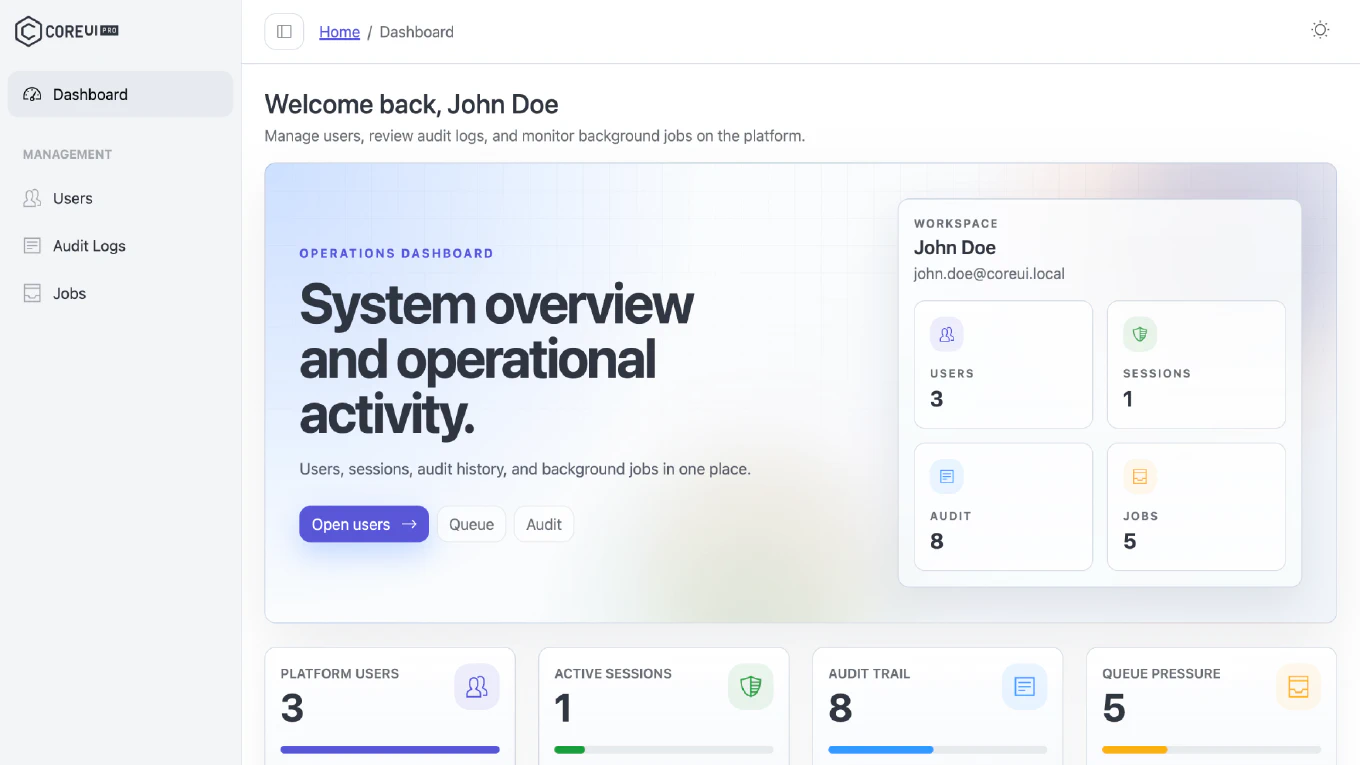
CoreUI PRO Angular Admin Template v5.7.20 - New Authentication Views, OTP Input, and Vitest
We are pleased to announce the release of CoreUI PRO Angular Admin Template v5.7.20. This feature release adds a complete set of authentication views - magic link, two-factor authentication, and the full password reset flow - together with a new OTP Input view, a search button in the header, a restructured navigation aligned with other CoreUI templates, a migration of the test runner to Vitest, and alignment with Angular 22.1.3.
CoreUI for Angular v5.7.20 - Modal Container Rendering
We are pleased to announce the release of CoreUI for Angular v5.7.20. This release adds container and portal inputs to the Modal component, allowing it to render outside its DOM position. No breaking changes were announced in the published release notes.
CoreUI Free Angular Admin Template v5.7.20 - Search Button and Angular 22.1.3 Update
We are pleased to announce the release of CoreUI Free Angular Admin Template v5.7.20. This update adds a search button view with a trigger in the default header, aligns the template with Angular 22.1.3, and refreshes the bundled CoreUI packages.
CoreUI PRO for Angular v5.7.20 - Modal Container Rendering
We are pleased to announce the release of CoreUI PRO for Angular v5.7.20. This release adds container and portal inputs to the Modal component, allowing it to render outside its DOM position. No breaking changes were announced in the published release notes.
CoreUI for Angular v5.7.19 - Search Button Component and Angular 22.1.3 Update
We are pleased to announce the release of CoreUI for Angular v5.7.19. This release introduces the new SearchButton component, refactors the widget templates to computed props, cleans up JSDoc comments across components, and aligns the library with Angular 22.1.3. No breaking changes were announced in the published release notes.
CoreUI PRO for Angular v5.7.19 - Search Button Component and Angular 22.1.3 Update
We are pleased to announce the release of CoreUI PRO for Angular v5.7.19. This release introduces the new SearchButton component, refactors the widget templates to computed props, cleans up JSDoc comments across components, and aligns the library with Angular 22.1.3. No breaking changes were announced in the published release notes.
CoreUI for Angular v5.7.18 - Angular 22.1.2 Update
We are pleased to announce the release of CoreUI for Angular v5.7.18. This maintenance release aligns the library with Angular 22.1.2, refreshes the Angular build tooling, and extends the README with Data Grid and Scheduler sections. No breaking changes were announced in the published release notes.
CoreUI Free Angular Admin Template v5.7.18 - Redesigned Authentication Views and Refreshed Dashboard
We are pleased to announce the release of CoreUI Free Angular Admin Template v5.7.18. This update redesigns the authentication views to match the new CoreUI layout, syncs the dashboard with the refreshed CoreUI content, reorganizes the navigation and views, and aligns the template with Angular 22.1.2.