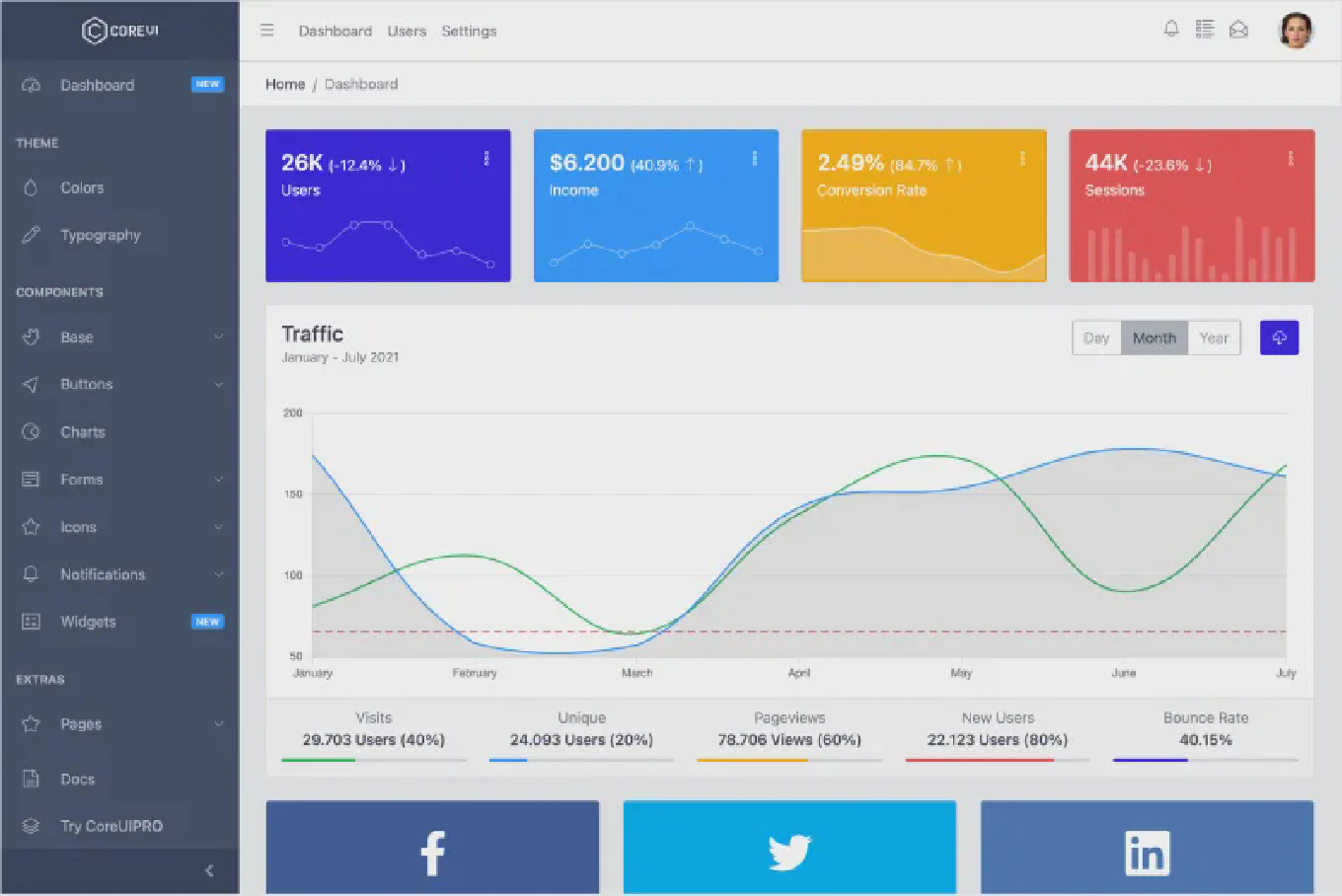
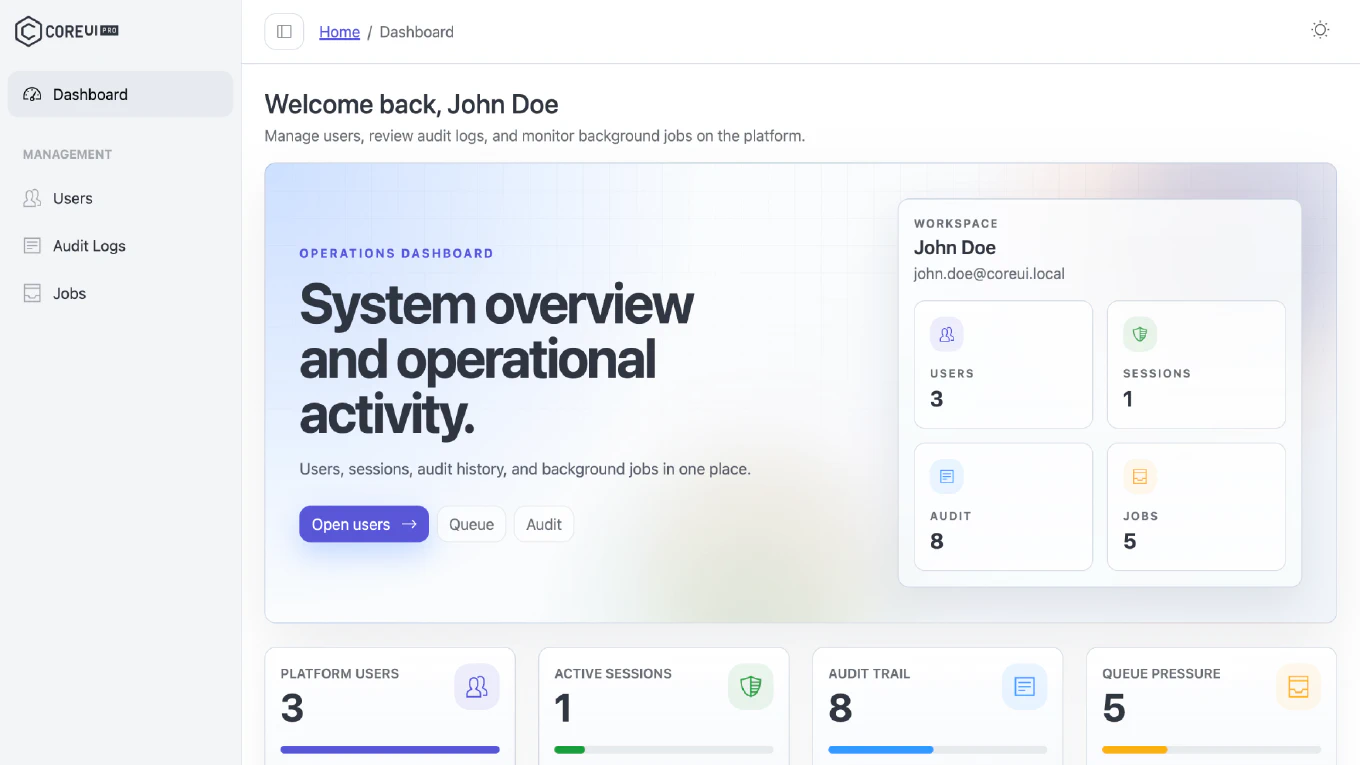
CoreUI Free Angular Admin Template v5.7.6 - Angular 22.0.7 Update

We are pleased to announce the release of CoreUI Free Angular Admin Template v5.7.6. This update aligns the template with Angular 22.0.7, refreshes the bundled CoreUI packages, and keeps Angular dashboard projects current with the latest maintenance improvements.
CoreUI PRO for Angular v5.7.4 - Angular 22 Update
We are pleased to announce the release of CoreUI PRO for Angular v5.7.4. This release aligns the library with Angular 22.0.6, hardens the Autocomplete and Time Picker, migrates the Toast component to native CSS animations, and refreshes the surrounding dependency stack.
CoreUI PRO for Angular v5.7.5 - Multi Select Fixes
We are pleased to announce the release of CoreUI PRO for Angular v5.7.5. This is a maintenance release focused on the Multi Select component. No breaking changes were announced in the published release notes.
CoreUI for Angular v5.7.4 - Angular 22 Update
We are pleased to announce the release of CoreUI for Angular v5.7.4. This release aligns the library with Angular 22.0.6, migrates the Toast component to native CSS animations, and refreshes the surrounding dependency stack.
CoreUI Free Angular Admin Template v5.7.4 - Angular 22 Update
We are pleased to announce the release of CoreUI Free Angular Admin Template v5.7.4. This update aligns the template with Angular 22.0.6, refreshes the bundled CoreUI packages, and keeps Angular dashboard projects current with the latest maintenance improvements.
CoreUI for Angular v5.6.25 - Angular 21.2.17 Update
We are pleased to announce the release of CoreUI for Angular v5.6.25. This release aligns the library with Angular 21.2.17, hardens the Icon component against XSS, and refreshes the surrounding dependency stack.
How to integrate CoreUI Pro with Angular enterprise apps
Integrating CoreUI Pro into an Angular enterprise application requires a strategic approach to handle professional components, private registries, and scalable architecture.
As the creator of CoreUI, I have architected dozens of enterprise-grade dashboards using this exact workflow.
The most efficient and modern solution involves configuring a private registry for the Pro packages and leveraging standalone components for a lean, high-performance bundle.
By following this guide, you will ensure your application is built on a reliable foundation with access to advanced features like the Smart Table.
How to log errors in Angular
Implementing robust error logging in Angular is critical for maintaining application stability and providing a professional user experience.
As the creator of CoreUI, I’ve architected logging systems for enterprise-grade dashboards and complex web applications.
The most efficient and modern solution in Angular is to implement the global ErrorHandler interface, which allows you to intercept every unhandled exception in one centralized location.
This approach ensures that no error goes unnoticed while keeping your component logic clean and focused on business requirements.
How to monitor Angular apps in production
Monitoring an Angular application in production is essential for identifying runtime exceptions, performance bottlenecks, and network failures that your users encounter.
As the creator of CoreUI in software development, I have built and maintained dozens of enterprise-grade applications where real-time monitoring was the difference between a quick fix and a day-long outage.
From my expertise, the most efficient and modern solution is to implement a centralized ErrorHandler combined with a custom telemetry service that pushes data to your preferred logging backend.
This approach ensures that every unhandled exception is captured automatically without cluttering your component logic.
How to use Sentry with Angular
Implementing robust error tracking is essential for maintaining high-quality web applications and ensuring a seamless user experience.
As the creator of CoreUI, I have integrated Sentry into hundreds of enterprise-grade Angular projects to achieve 99.9% crash-free sessions.
The most efficient and modern way to use Sentry with Angular is by utilizing the @sentry/angular SDK combined with Angular’s native ErrorHandler and standalone API providers.
This approach allows you to capture every unhandled exception, monitor performance bottlenecks, and gain deep insights into production issues without manual overhead.