Bootstrap Data Table: When a Plain Table Stops Being Enough
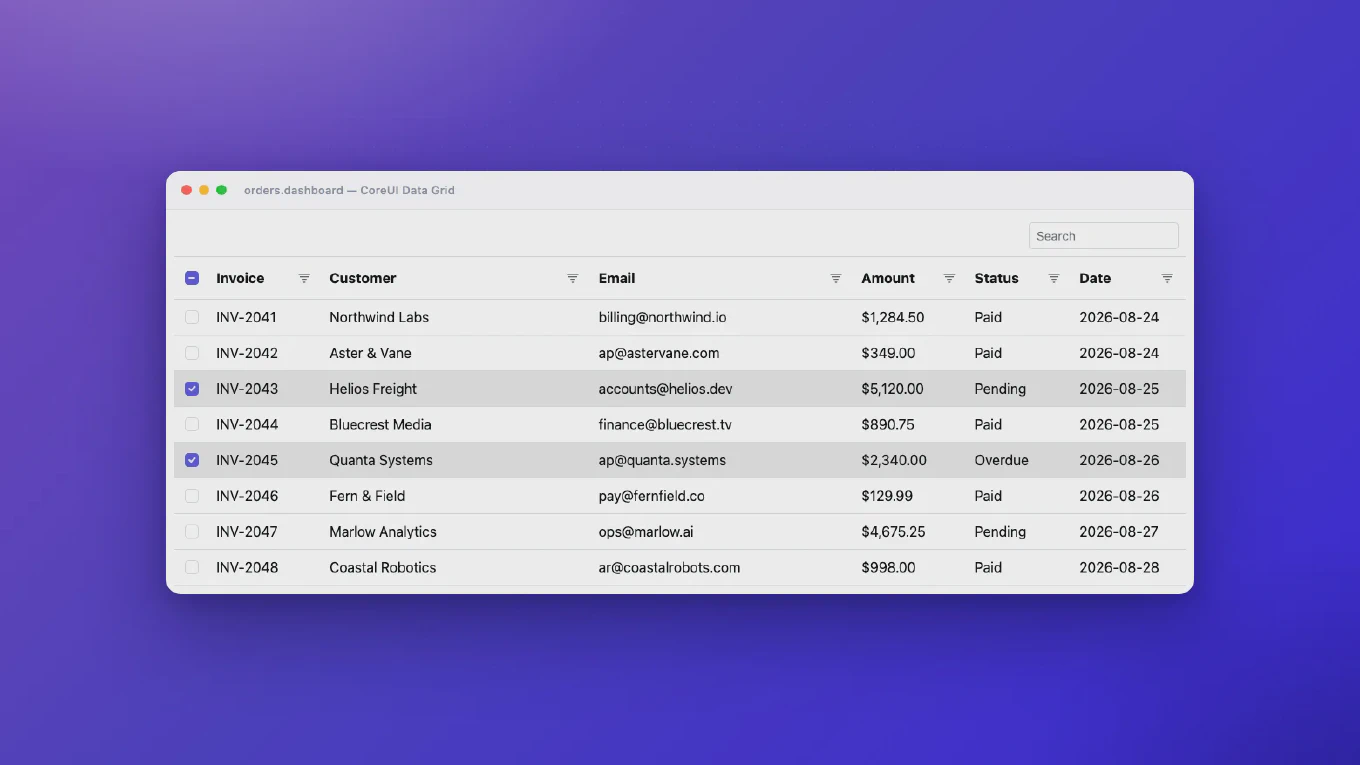
Every Bootstrap data table starts the same way: a <table class="table">, a
loop over some rows, done. And for a surprising number of applications, that
is genuinely all you need.
Then the requirements arrive one at a time. “Can we sort this by date?” “Can I search it?” “It’s slow with this quarter’s data.” Each one looks small, and each one is answerable with a few lines of JavaScript — until, at a fairly predictable point, it isn’t.
This article walks that ladder honestly. For each threshold we show what you can build yourself with plain Bootstrap (or CoreUI, which shares the same table markup and classes) and vanilla JavaScript, where the hand-rolled version starts to leak, and at which rung it stops being reasonable to keep writing table infrastructure by hand. If your table has 50 rows and never will have more, the code below is all you need — no library, no license, nothing to ship but a few kilobytes of your own JavaScript.
How to build a table in Vue
Building data tables is fundamental for Vue applications that display structured data like user lists, product catalogs, or analytics dashboards. As the creator of CoreUI, I’ve built countless data tables in enterprise applications. The most effective solution is to use the v-for directive to render table rows from data arrays with proper headers. This approach is simple, performant, and provides full control over table structure and styling.