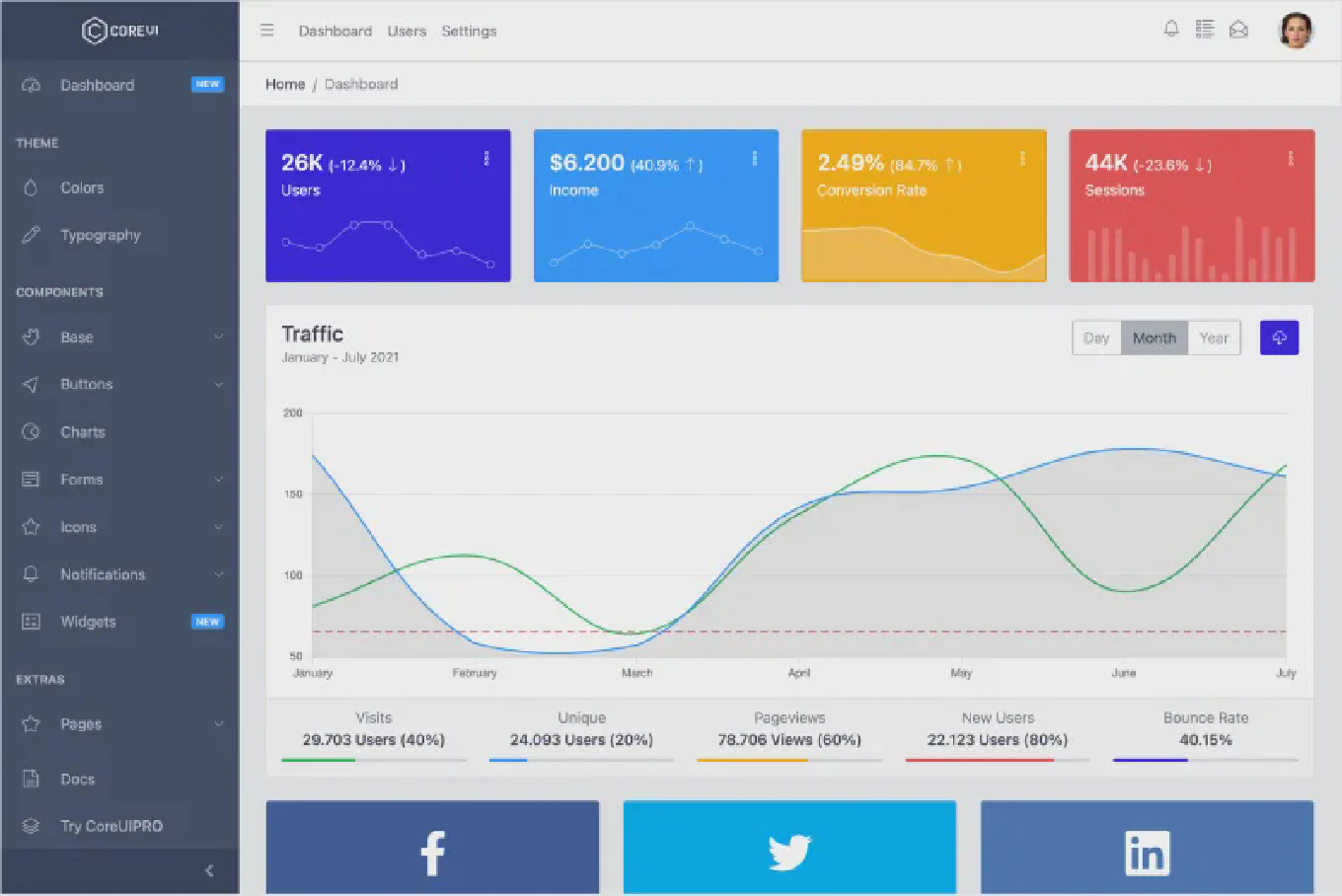
How to build a dashboard in React
Building a dashboard in React requires organizing multiple data visualizations, widgets, and navigation elements into a coherent, responsive interface. With over 10 years of experience building React applications and as the creator of CoreUI, a widely used admin template library, I’ve architected hundreds of dashboards for enterprise applications. From my expertise, the most effective approach is to create a flexible layout system using CSS Grid combined with reusable React components for widgets and data displays. This method provides responsive layouts, maintainable code, and excellent performance.
How to drag and drop in Angular with CDK
Implementing drag and drop functionality in Angular applications requires handling complex mouse and touch events, managing state, and providing visual feedback. With over 10 years of experience building Angular applications and as the creator of CoreUI, I’ve implemented drag and drop features in numerous enterprise dashboards and admin panels. From my expertise, the most efficient approach is to use the Angular CDK (Component Dev Kit) drag-drop module, which provides a robust, accessible, and well-tested solution. This method handles all the complexity for you while remaining highly customizable.
How to handle mouse events in Vue
Mouse event handling enables rich user interactions like clicks, hovers, drag-and-drop, and custom gestures in web applications. As the creator of CoreUI with over 12 years of Vue.js experience since 2014, I’ve implemented complex mouse interactions in enterprise dashboards. Vue provides straightforward event listeners with modifiers to handle mouse events efficiently and declaratively. This approach creates interactive interfaces with tooltips, context menus, draggable elements, and custom behaviors.
How to use Material UI in React
Building React applications with Material Design principles requires a comprehensive component library that implements Google’s design system. As the creator of CoreUI with over 12 years of React development experience since 2014, I’ve worked with various UI frameworks in production applications. Material UI (MUI) is the most popular React implementation of Material Design, offering 50+ customizable components with excellent TypeScript support. The installation is straightforward and provides immediate access to buttons, forms, navigation, and layout components.
How to use CoreUI in React
Building professional admin panels and dashboards requires a robust UI component library that offers consistency, accessibility, and customization. As the creator of CoreUI with over 25 years of software development experience, I designed this library specifically to solve these challenges for React developers. CoreUI for React provides 90+ production-ready components built on Bootstrap 5, offering both free and professional versions. The installation is straightforward and integrates seamlessly with any React application.
How to animate components in Vue
Component animations enhance user experience by providing visual feedback for state changes, drawing attention to important elements, and creating polished interfaces. As the creator of CoreUI, a widely used open-source UI library, I’ve implemented smooth animations in Vue applications throughout my 11 years of frontend development. The most versatile approach is using Vue’s built-in Transition component with CSS transitions or animations for declarative animation control. This method provides automatic class management, supports various animation types, and integrates seamlessly with Vue’s reactivity system.
How to use CoreUI with Vue
CoreUI for Vue provides production-ready UI components, responsive layouts, and professional admin dashboard templates designed specifically for Vue 3 applications. As the creator of CoreUI, a widely used open-source UI library, I’ve designed CoreUI for Vue to deliver enterprise-grade components throughout my 11 years of frontend development. The most efficient approach is installing @coreui/vue and @coreui/icons-vue packages and importing components as needed. This method provides fully integrated Vue 3 components with Composition API support, TypeScript definitions, and comprehensive documentation.
How to integrate Angular Material
Angular Material provides comprehensive Material Design components with accessibility, internationalization, and theming built-in for professional Angular applications. As the creator of CoreUI, a widely used open-source UI library, I’ve integrated Angular Material in enterprise projects throughout my 11 years of frontend development. The most efficient approach is using Angular CLI’s ng add schematic which automatically configures Material with proper dependencies and setup. This method ensures correct installation, configures theming, adds required animations, and sets up typography for immediate component usage.
How to integrate CoreUI with Angular
Integrating CoreUI with Angular provides enterprise-grade UI components, admin dashboard layouts, and professional design system for business applications. As the creator of CoreUI, a widely used open-source UI library, I’ve designed CoreUI for Angular to deliver production-ready components throughout my 11 years of frontend development. The most efficient approach is installing @coreui/angular and @coreui/icons-angular packages and importing required modules. This method provides fully integrated Angular components with TypeScript support, reactive forms compatibility, and comprehensive documentation.
How to integrate Bootstrap with Angular
Integrating Bootstrap with Angular provides ready-to-use responsive components and utility classes for rapid UI development. As the creator of CoreUI, a widely used open-source UI library, I’ve integrated Bootstrap into Angular projects throughout my 11 years of frontend development. The most reliable approach is installing Bootstrap via npm and configuring it in angular.json for global availability. This method ensures proper loading order, maintains TypeScript compatibility, and enables all Bootstrap features including JavaScript components.