How to build a checkout page in Angular
Building a checkout page is a critical task in e-commerce that requires a perfect balance of user experience and data integrity.
As the creator of CoreUI, I’ve designed dozens of checkout flows that handle complex validation and state management.
In Angular, the most efficient way to manage a multi-field checkout process is by utilizing Reactive Forms combined with a modular component architecture.
This approach ensures your form is scalable, easy to test, and provides immediate feedback to the user.
How to build a Kanban board in Angular
Building a functional and performant Kanban board in Angular is a common requirement for project management and CRM applications.
As the creator of CoreUI, I have built dozens of drag-and-drop interfaces for enterprise-grade dashboards.
The most efficient and modern solution is to leverage the @angular/cdk/drag-drop module, which handles the complex physics and accessibility of moving items between lists.
By combining this with CoreUI components, you can create a board that is both highly functional and visually polished.
How to build a weather app in Angular
Building a weather application in Angular is a classic project that demonstrates how to handle asynchronous data, service injection, and reactive UI updates.
As the creator of CoreUI, I’ve built numerous data-driven dashboards that require real-time API integration.
The most efficient way to build this in Angular is by leveraging HttpClient for API calls and Signals for state management, which provides a highly performant and reactive user experience.
This guide will show you how to structure your service, manage state, and build a polished UI using CoreUI components.
How to build an e-commerce cart in Angular
Building a robust e-commerce cart is a fundamental requirement for any online storefront, yet managing state effectively across multiple components can often become complex. As the creator of CoreUI, I have architected numerous enterprise-level e-commerce systems using Angular since its early versions. From my expertise, the most efficient and modern solution for Angular applications is to leverage a singleton service combined with Angular Signals for reactive state management. This approach ensures that your cart data is synchronized across the entire application without the overhead of heavy state management libraries.
How to create a route guard in Angular
Securing application routes and managing navigation access is a fundamental requirement for any professional web application.
As the creator of CoreUI, I have built and secured hundreds of complex Angular architectures.
From my expertise, the most efficient and modern way to handle this in Angular is by using Functional Route Guards, which were introduced to replace the older, more verbose class-based approach.
This modern pattern leverages the inject function to create lightweight, modular, and highly testable security checks for your routes.
CoreUI for Angular v5.6.23 - Angular 21.2.12 Update

We are pleased to announce the release of CoreUI for Angular v5.6.23. This release aligns the library with Angular 21.2.12, resolves a backdrop test issue, and refreshes the surrounding dependency stack.
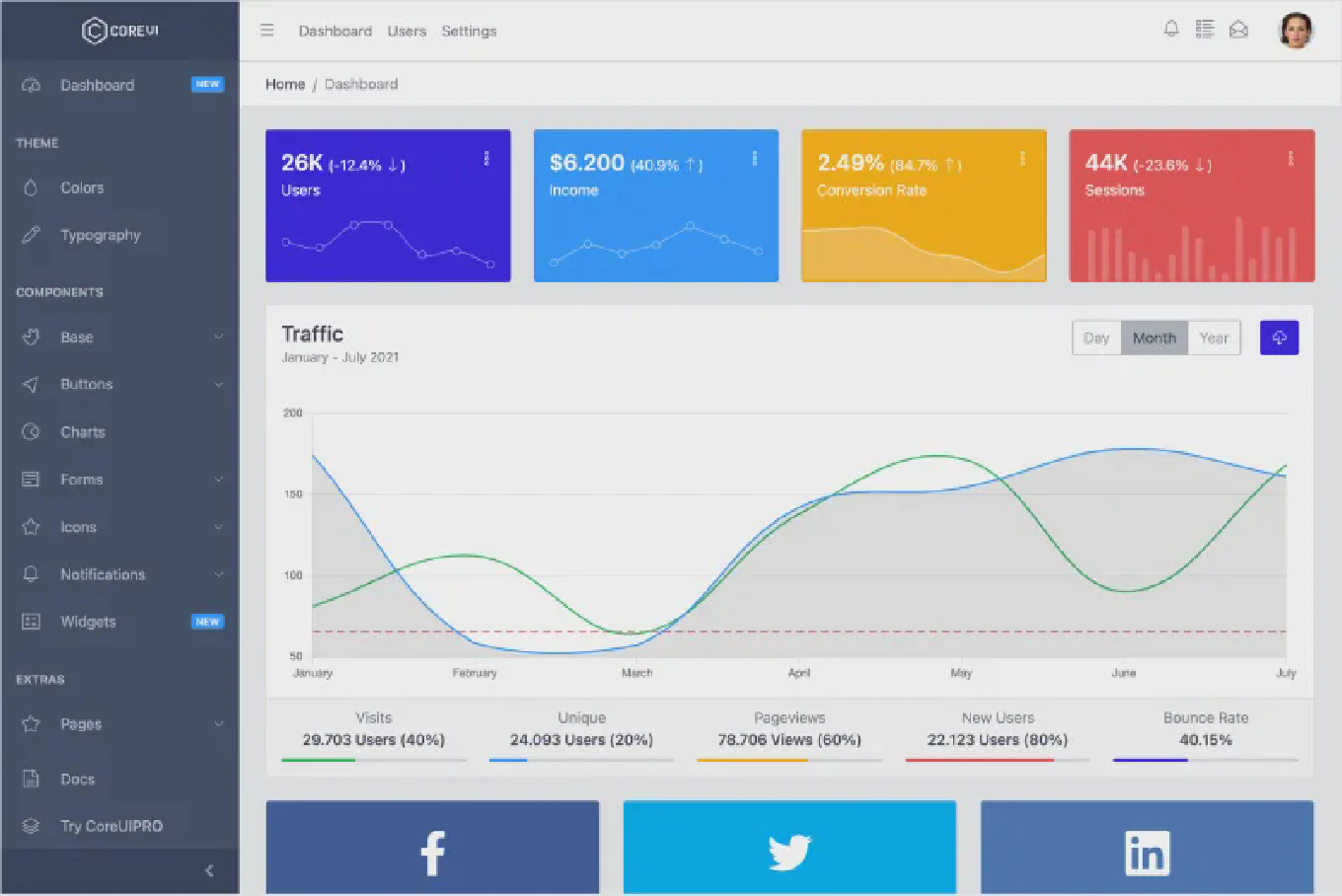
CoreUI Free Angular Admin Template v5.6.23 - Angular 21.2.12 Update
We are pleased to announce the release of CoreUI Free Angular Admin Template v5.6.23. This update aligns the template with Angular 21.2.12, refreshes the bundled CoreUI packages, and keeps Angular dashboard projects current with the latest maintenance improvements.
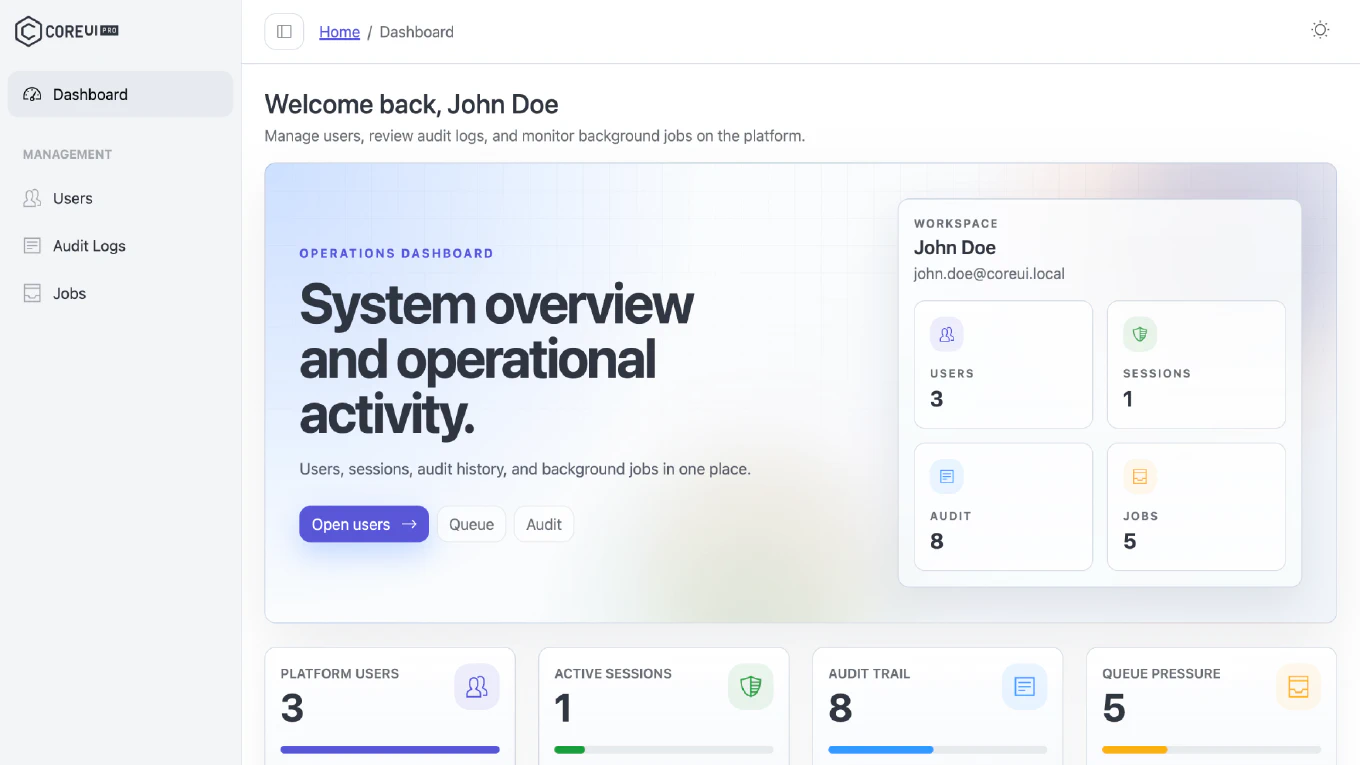
CoreUI PRO Angular Admin Template v5.6.23 - Angular 21.2.12 Update
We are pleased to announce the release of CoreUI PRO Angular Admin Template v5.6.23. This update aligns the template with Angular 21.2.12, refreshes the bundled CoreUI PRO packages, and keeps enterprise dashboard projects up to date with the latest maintenance improvements.
CoreUI PRO for Angular v5.6.23 - Angular 21.2.12 Update
We are pleased to announce the release of CoreUI PRO for Angular v5.6.23. This release aligns the library with Angular 21.2.12, refreshes the surrounding dependency stack, and keeps CoreUI PRO applications current with the latest maintenance updates.
CoreUI for Angular v5.6.22 - Angular 21.2.10 Security Update
We are pleased to announce the release of CoreUI for Angular v5.6.22. This security and maintenance update brings full support for Angular 21.2.10 and includes critical security patches addressing multiple vulnerabilities in hono, lodash, path-to-regexp, picomatch, brace-expansion, and follow-redirects. This update ensures your Angular applications run securely with the latest framework improvements and comprehensive dependency updates.