CoreUI Free Angular Admin Template v5.6.22 - Angular 21.2.10 Update

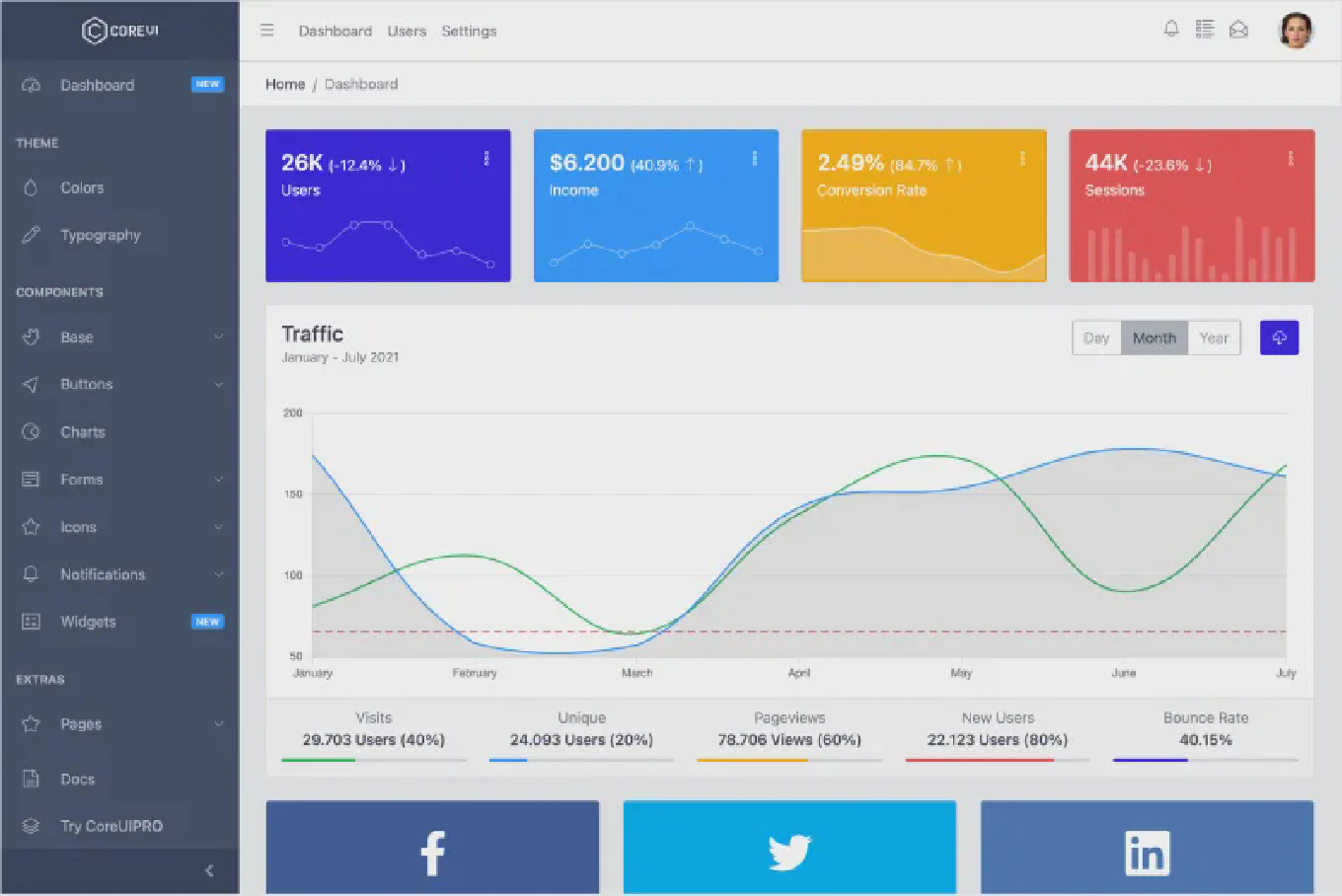
We are pleased to announce the release of CoreUI Free Angular Admin Template v5.6.22. This security and maintenance update brings full support for Angular 21.2.10, includes updated CoreUI for Angular v5.6.22 components, and addresses multiple security vulnerabilities. This release ensures your Angular admin dashboard runs securely with the latest framework improvements.
CoreUI PRO Angular Admin Template v5.6.22 - Angular 21.2.10 Update
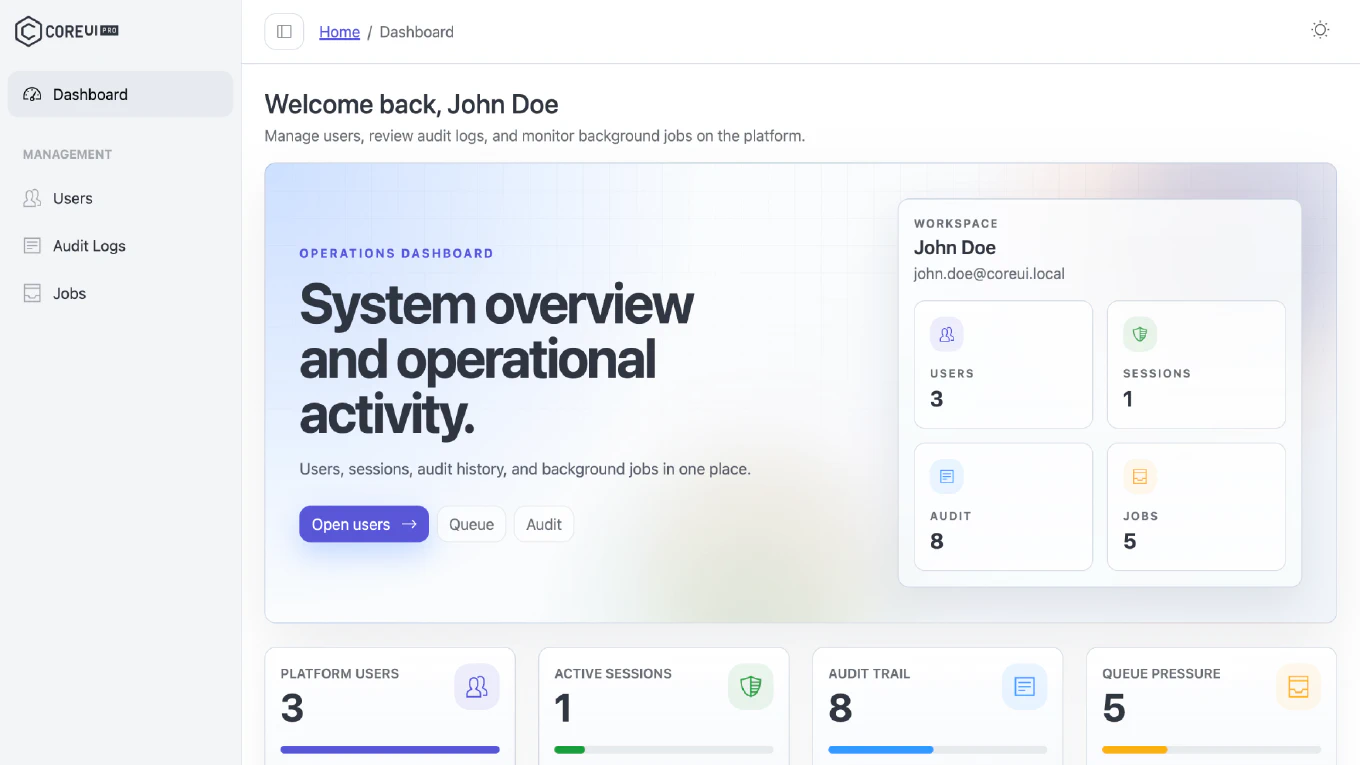
We are pleased to announce the release of CoreUI PRO Angular Admin Template v5.6.22. This security and maintenance update brings full support for Angular 21.2.10, includes updated CoreUI PRO for Angular v5.6.22 components, and addresses multiple security vulnerabilities. This release ensures your enterprise Angular admin dashboard runs securely with the latest framework improvements and all exclusive PRO features.
CoreUI PRO for Angular v5.6.22 - Angular 21.2.10 Security Update
We are pleased to announce the release of CoreUI PRO for Angular v5.6.22. This security and maintenance update brings full support for Angular 21.2.10 and includes critical security patches addressing multiple vulnerabilities in hono, lodash, path-to-regexp, picomatch, brace-expansion, and follow-redirects. This update ensures your enterprise Angular applications run securely with the latest framework improvements and comprehensive dependency updates.
How to build a chat app in Angular
Building a chat app in Angular demonstrates real-time communication with WebSockets, infinite scroll for message history, and reactive state management for incoming messages. As the creator of CoreUI with Angular development experience since 2014, I’ve built the chat interface components in CoreUI Angular templates that handle message threading, timestamps, and auto-scroll to the latest message. The architecture uses a WebSocket service that manages the connection and exposes an observable of incoming messages, keeping the chat component clean and focused on rendering. Proper cleanup of WebSocket connections on component destroy prevents memory leaks in long-running applications.
How to build a notes app in Angular
A notes app combines CRUD operations, real-time search filtering, and rich text display in an intuitive interface that teaches essential Angular patterns.
As the creator of CoreUI with Angular development experience since 2014, I use this project structure in CoreUI Angular templates as the starting point for more complex content management features.
The architecture uses a reactive service with BehaviorSubject for state, the async pipe for memory-safe subscriptions, and combineLatest to derive the filtered list from both the notes array and the search query.
This reactive approach avoids imperative subscription management and keeps the component template simple.
How to build a todo app in Angular
Building a todo app in Angular is the ideal project for learning reactive state management, reactive forms, and component communication patterns in a realistic context.
As the creator of CoreUI with Angular development experience since 2014, I use this project structure as a reference for the correct separation of concerns between a service for state, a store service for data, and components for display.
The state lives in an injectable service using BehaviorSubject so any component in the tree can subscribe to todo changes reactively.
This pattern scales from a simple todo app to complex enterprise state management.
How to build a settings page in Angular
A settings page organizes application configuration into logical sections — account details, notifications preferences, security settings, and integrations — each in a separate tab or card. As the creator of CoreUI with Angular development experience since 2014, I’ve designed the settings page structure in CoreUI Angular templates that handles the separation of concerns between different settings categories. The key is using Angular’s tab navigation to organize sections, reactive forms for each section, and saving changes independently so updating notifications doesn’t require re-entering account details. Each settings section should be a standalone component with its own form and save button.
How to build a profile page in Angular
A user profile page combines several features: displaying current user data, an editable form for updating details, avatar upload, and a separate password change section. As the creator of CoreUI with Angular development experience since 2014, I’ve built the profile page components in CoreUI Angular templates that thousands of enterprise developers use as their starting point. The key is splitting the page into focused components — a profile info form and a security settings form — so each has clear responsibility and independent validation. Pre-populating forms from the current user data and handling partial updates cleanly is the most important implementation detail.
How to build a signup page in Angular
A signup page in Angular requires a reactive form with custom validators for password confirmation, client-side validation before submission, and an HTTP call to register the user on the backend. As the creator of CoreUI with Angular development experience since 2014, I designed the registration components in CoreUI Angular templates that handle the complete sign-up flow including error handling and success redirects. The most important custom validation pattern is the password confirmation check — Angular’s built-in validators don’t cover cross-field validation, so you must write a custom group validator. This validator compares two fields and marks the confirmation field as invalid if they don’t match.
CoreUI PRO Angular Admin Template v5.6.21 - Security Update
We are pleased to announce the release of CoreUI PRO Angular Admin Template v5.6.21. This critical security update brings full support for Angular 21.2.5, includes updated CoreUI PRO for Angular v5.6.21 components, and addresses multiple security vulnerabilities. This release ensures your enterprise Angular admin dashboard runs securely with the latest framework improvements and all exclusive PRO features.