How to containerize Angular app
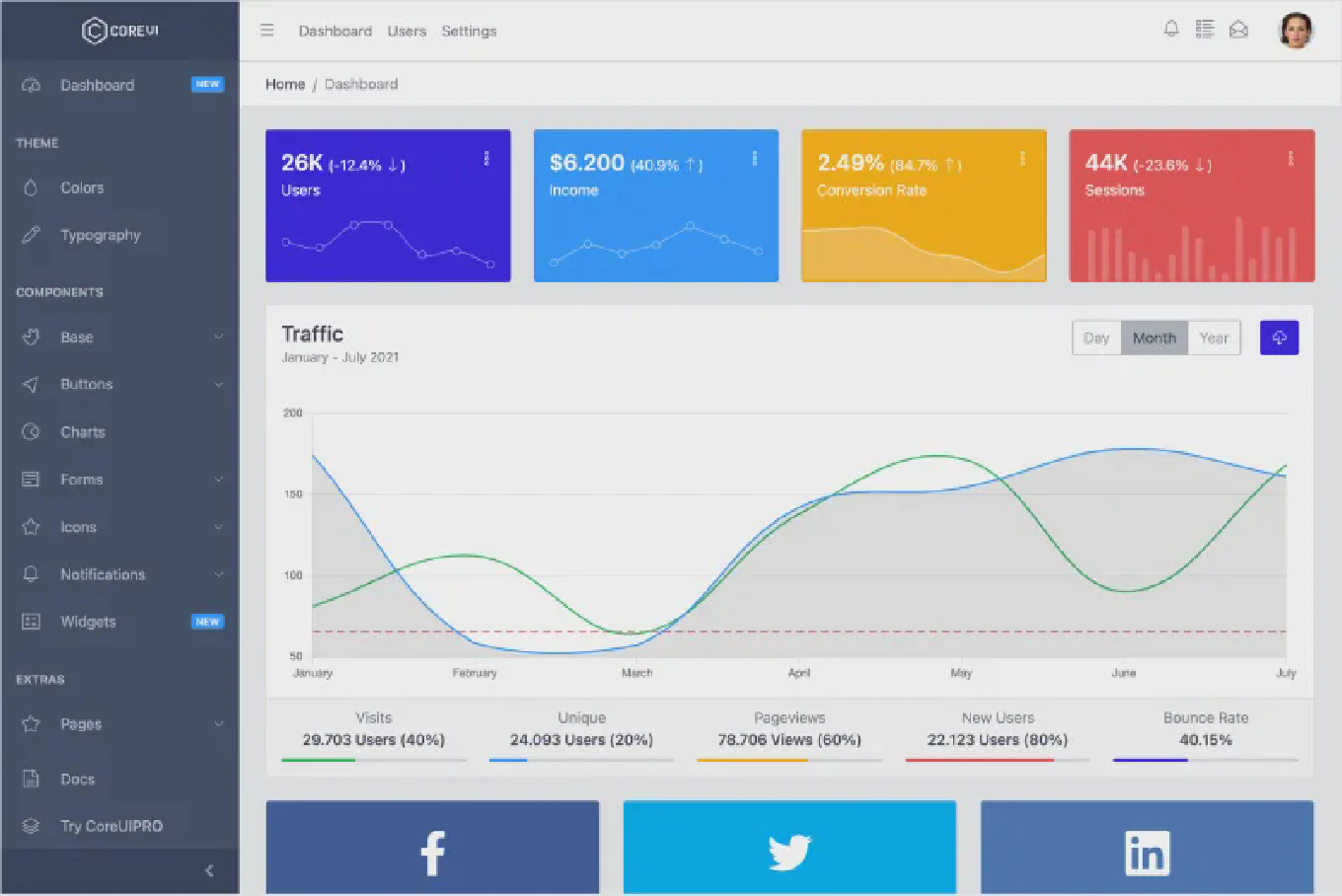
Containerizing an Angular application is a standard practice for modern web development, ensuring consistency across development, staging, and production environments. As the creator of CoreUI, I have architected and deployed hundreds of containerized frontend applications. The most efficient way to achieve this is through a multi-stage Docker build, which separates the build environment from the production runtime. This approach results in lightweight, secure, and high-performance images ready for any cloud provider, and it is exactly how we handle deployments for our Angular Dashboard Template.
How to deploy Angular on Kubernetes
Deploying an Angular application to Kubernetes is a standard requirement for modern, scalable web applications.
As the creator of CoreUI, I have architected and deployed numerous enterprise-grade frontend applications using container orchestration.
The most efficient and modern approach involves creating a multi-stage Docker build to compile your app and then serving the static assets via Nginx within a Kubernetes cluster.
This method ensures your production environment is lightweight, secure, and easily manageable through declarative configuration files.
How to deploy Angular with Docker
Deploying Angular applications to production requires a consistent and reproducible environment to avoid the “it works on my machine” syndrome. As the creator of CoreUI in software development, I’ve containerized hundreds of enterprise-grade Angular projects to ensure seamless scaling. The most efficient and modern solution is using a multi-stage Docker build, which separates the build environment from the production runtime for maximum security and minimal image size. This approach leverages Node.js for compilation and Nginx for serving static assets, providing a high-performance production setup.
How to containerize Node.js with Docker
Containerizing Node.js applications with Docker ensures consistent environments across development, testing, and production. As the creator of CoreUI, I’ve Dockerized numerous production Node.js services. Docker containers package applications with their dependencies, making deployment reliable and portable across different environments. This approach simplifies deployment, scaling, and environment management for Node.js applications.