How CoreUI Pro Next.js Boilerplate helps teams ship faster in production
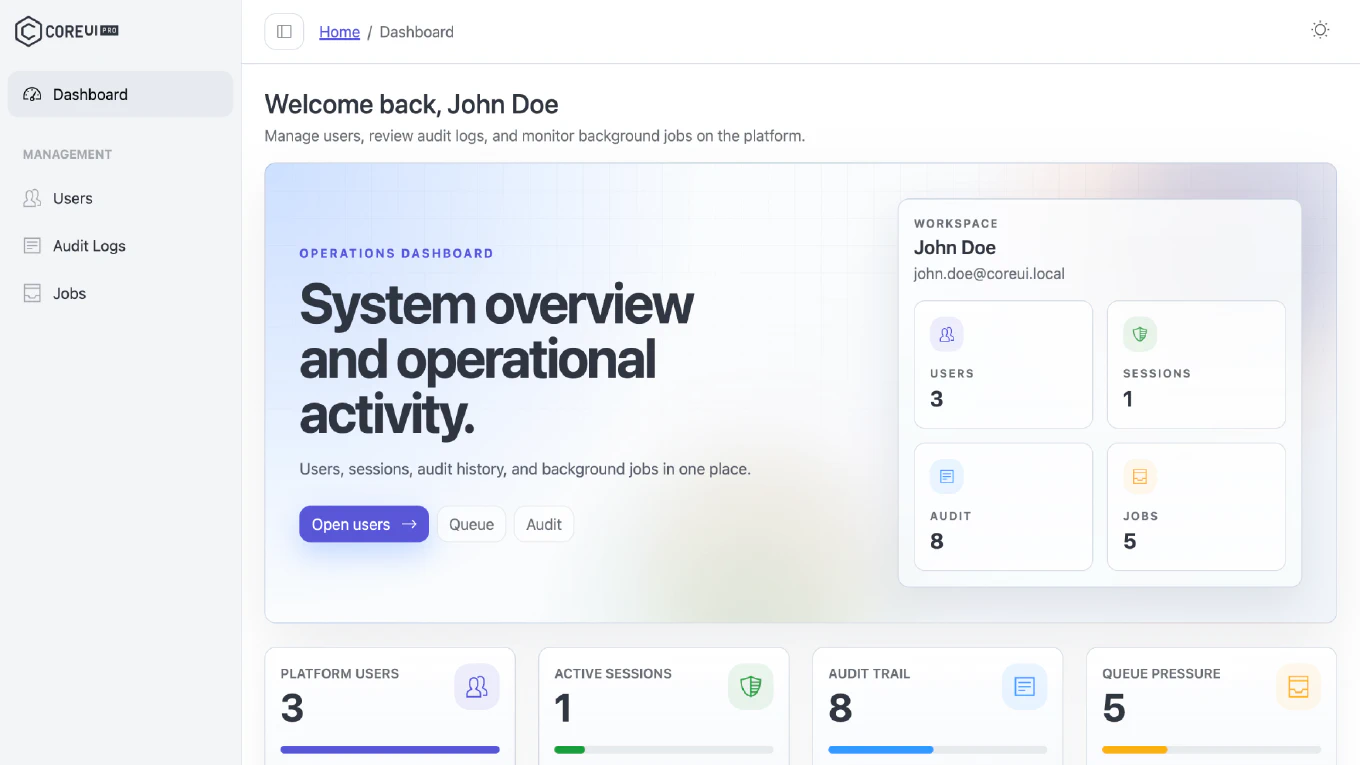
Shipping an internal tool or admin panel faster is rarely about writing more code — it is about writing less of the infrastructure code that every screen depends on but none of the product requirements mention. CoreUI Pro Next.js Boilerplate is built on that premise: it is not a starter template with polished screenshots, but a production-oriented application foundation with authentication, RBAC, and the structural patterns teams otherwise spend weeks assembling before touching a single product feature. That changes the buying criteria. Instead of comparing screenshots, teams should compare delivery speed, maintainability, access control, and how quickly the first real screen ships.
What's inside CoreUI Pro Next.js Boilerplate and who it is really for
What’s inside CoreUI Pro Next.js Boilerplate and who it is really for is really a decision about speed, risk, and how much application infrastructure your team wants to build alone. For CoreUI, this matters because our Next.js boilerplate is not just a starter template. It is a production-oriented application foundation with authentication, RBAC, and the kind of structure teams usually spend weeks rebuilding internally. That changes the buying criteria. Instead of comparing screenshots, teams should compare delivery speed, maintainability, access control, and how quickly they can ship a real internal product.
How to implement role-based auth in Angular
Role-based authentication (RBAC) allows you to control access to routes and features based on user roles. As the creator of CoreUI, I’ve implemented enterprise-grade authentication systems for Angular applications serving millions of users.
The most maintainable approach combines an auth service, route guards, and structural directives to enforce role-based access control throughout your application.